Product Overview
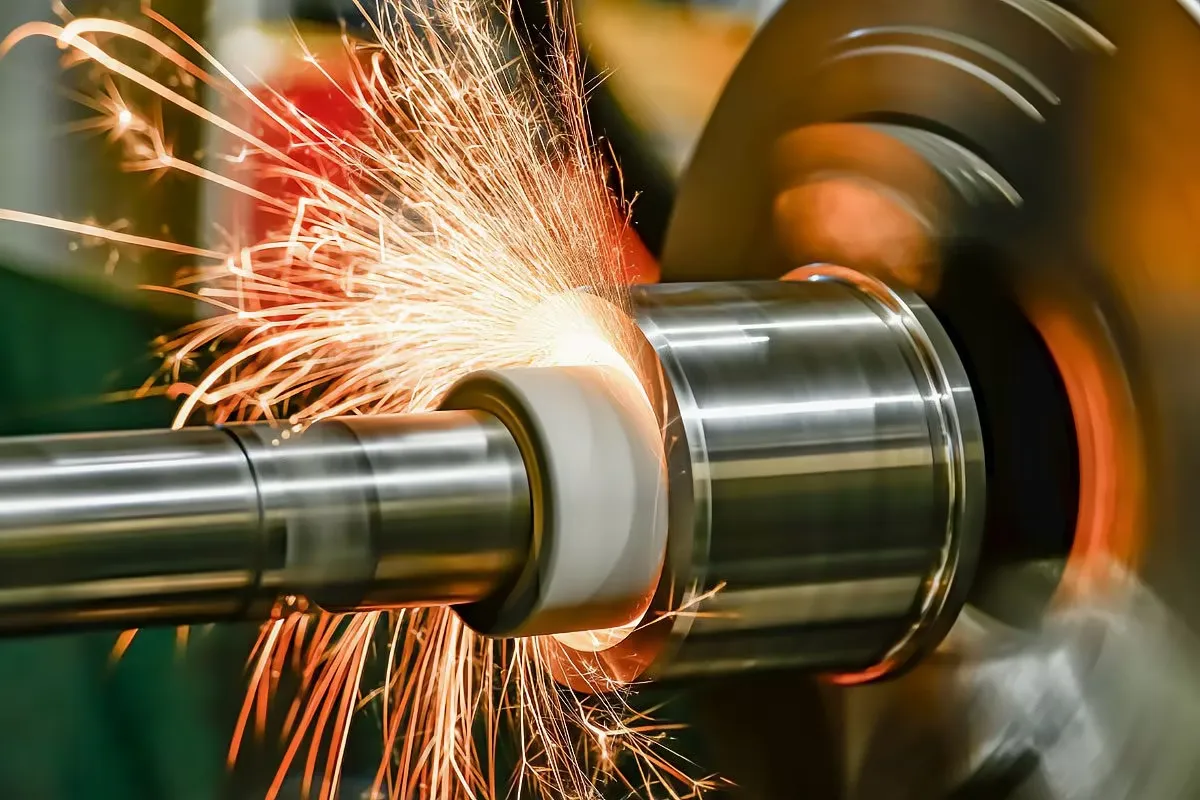
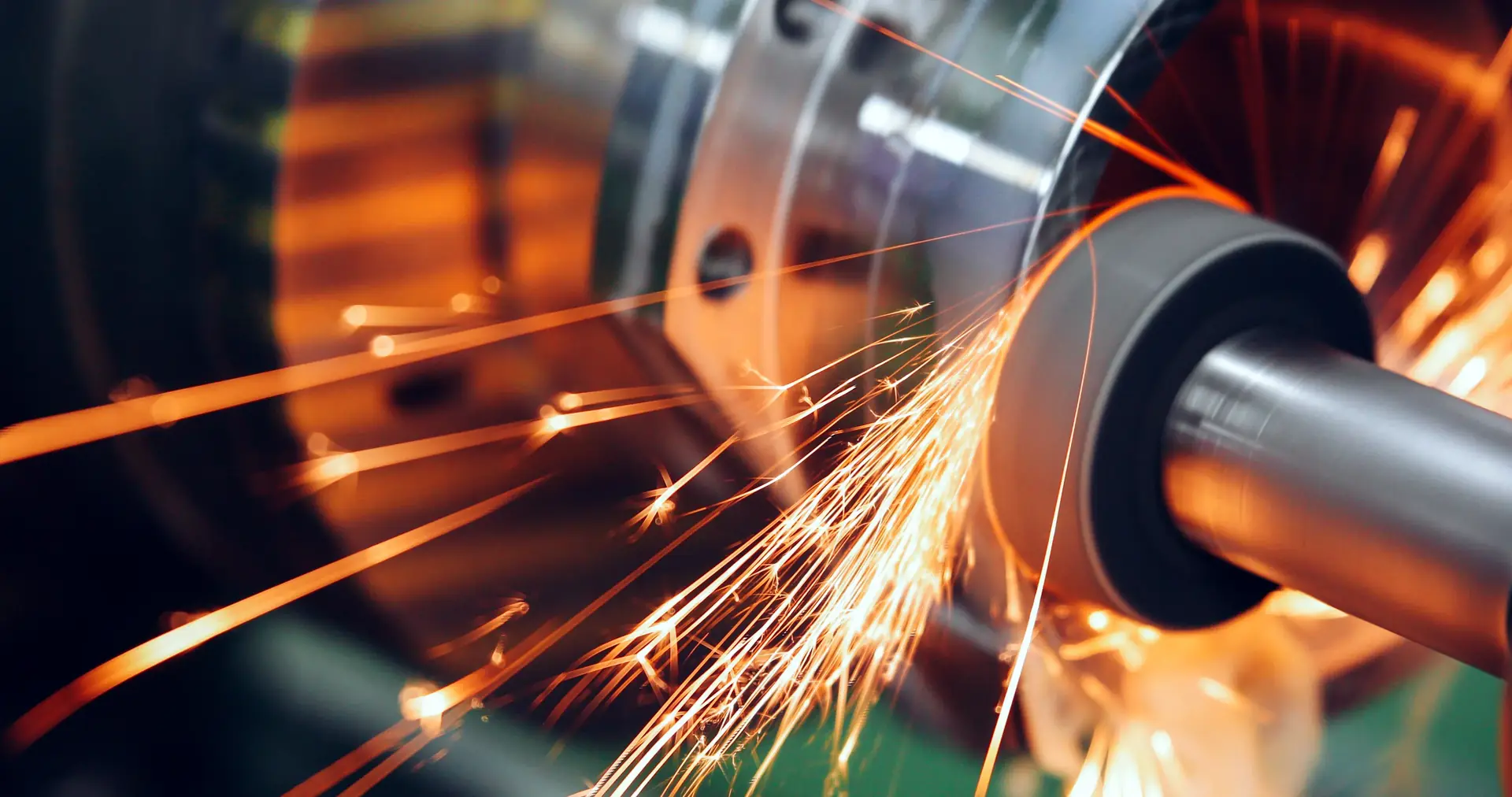
Precision grinding services at Leading Top Union deliver dimensional accuracy and surface integrity critical for high-stress rotating equipment, hydraulic components, and structural assemblies. Operating from a Suzhou facility, surface grinding flatness is maintained within 0.005mm per meter and cylindrical roundness within 0.002mm across parts up to 6,000mm in length. Grinding capabilities cover hardened steel (up to 62 HRC), tungsten carbide, and advanced ceramics, with surface finishes ranging from Ra 0.1μm to Ra 0.8μm depending on material and process selection. ISO 3834-2 quality control protocols are integrated throughout every grinding operation, ensuring traceable process documentation for oil and gas, offshore wind, and power generation applications.
Machine Shop Capabilities
The machine shop houses a combination of surface grinders with 2,000mm × 800mm tables, cylindrical grinders handling 800mm maximum diameter, and centerless grinders optimized for high-volume production runs. For complex profiles and form grinding, creep-feed grinding technology is deployed that removes material in a single pass while maintaining tolerances within ±0.01mm. This capability is particularly valuable for turbine blade roots, gear tooth profiles, and extrusion die cavities where conventional reciprocating grinding would require multiple setups. Internal grinding operations achieve bore finishes of Ra 0.2μm with diameter tolerances held to H6 grade, suitable for hydraulic cylinder bores and bearing journals in mining equipment and shipbuilding drivetrains.
Material-Specific Grinding Parameters
Material removal rates are optimized through coolant selection and wheel specification tailored to each workpiece. For hardened tool steels (AISI D2, H13, M2), aluminum oxide wheels with controlled porosity are used to prevent burn and maintain surface integrity. Carbide components receive diamond wheel grinding with micron-grit sizes selected for edge retention and chipping prevention. Ceramic parts, including alumina and zirconia, are processed with resin-bonded diamond wheels under flood coolant to manage thermal stress and achieve dimensional stability within 0.005mm. All grinding parameters are documented per ASME B46.1 surface texture standards, and final inspection reports include profilometer traces and CMM verification for critical dimensions.
Process Capability and Quality Assurance
Process capability studies conducted on the cylindrical grinding line demonstrate Cpk values exceeding 1.67 for diameter tolerances of ±0.005mm, indicating a statistically capable process suitable for Six Sigma manufacturing environments. For surface grinding operations on large base plates and machine tool components, parallelism is maintained within 0.008mm over 1,500mm length using magnetic chucks and precision leveling fixtures. The quality management system, certified under ISO 9001:2015, requires first-article inspection for every new grinding program, with dimensional data archived for customer review. This systematic approach reduces setup time by 30% compared to industry averages while maintaining repeatable accuracy across production batches.
Applications & Industries
In the oil and gas sector, precision grinding services support downhole tool components, valve stems, and pump shafts that must withstand high-pressure differentials and abrasive drilling fluids. Cylindrical grinding of Inconel 718 and 17-4 PH stainless steel shafts for subsea trees requires roundness within 0.002mm to ensure reliable sealing with elastomeric packers. Surface grinding of gate valve seats achieves flatness of 0.003mm per meter, critical for bubble-tight shutoff at pressures exceeding 15,000 psi. Creep-feed grinding capability produces complex seal grooves and thread forms in one setup, eliminating secondary operations and reducing lead times for API 6A and API 17D compliant components.
Offshore Wind Turbine Components
Offshore wind turbine manufacturers rely on precision grinding for main shaft bearing journals, gearbox housings, and pitch control components. Cylindrical grinding of 42CrMo4 steel shafts up to 6,000mm length maintains roundness within 0.002mm and surface finish of Ra 0.4μm, directly influencing bearing life under variable load conditions. Internal grinding of planetary gear bores achieves H6 tolerances with Ra 0.2μm finish, reducing friction losses by up to 12% compared to conventional machining. For tower flange surfaces, surface grinders hold flatness within 0.005mm per meter, ensuring uniform bolt load distribution across 4-meter diameter flanges per EN 1090-2 EXC3 requirements. These capabilities support DNV-GL type certification for offshore structures operating in North Sea and Baltic Sea environments.
Mining and Mineral Processing Equipment
Mining and mineral processing equipment demands grinding services for crusher shafts, mill trunnions, and slurry pump components exposed to extreme wear and impact loads. Centerless grinding of hardened steel pins and rollers for conveyor systems achieves throughput rates of 500 parts per hour with diameter consistency within ±0.008mm. Surface grinding of wear plates for chutes and hoppers maintains flatness within 0.01mm over 1,200mm length, extending service life by 40% compared to as-welded surfaces. For grinding mill pinion shafts, cylindrical grinding of AISI 4340 steel to 58 HRC achieves surface finish of Ra 0.3μm, reducing gear mesh noise and vibration in high-torque applications. Process documentation includes magnetic particle inspection and hardness verification per ASTM E709 and ASTM E18 standards.
Power Generation Component Precision
Power generation applications include gas turbine rotor spacers, steam turbine nozzle rings, and generator shaft journals requiring micron-level geometry control. Creep-feed grinding of fir tree root forms in nickel-based superalloys (Waspaloy, Udimet 720) achieves profile tolerances of ±0.015mm with surface integrity free of recast layers or microcracks. Surface grinding of combustion liner components maintains wall thickness uniformity within 0.02mm, critical for thermal stress distribution at operating temperatures exceeding 1,000°C. For hydroelectric turbine shafts up to 6,000mm length, cylindrical grinders hold runout within 0.01mm total indicator reading (TIR), ensuring smooth operation at rotational speeds up to 600 RPM. All grinding processes for power generation comply with ASME B31.1 and ISO 1940-1 balance quality requirements.
Why Choose Leading Top Union for Precision Grinding Services
Leading Top Union combines ISO 3834-2 welding quality standards with AWS D1.1 structural steel certification and EN 1090-2 EXC3 execution class, ensuring precision grinding services integrate seamlessly with fabricated assemblies and welded structures. This multi-standard capability means grinding weld preparations, post-weld surfaces, and finished components can be done under a single quality system, reducing supply chain complexity for EPC contractors managing large-scale projects. Quality engineers review every grinding program against customer specifications, generating inspection reports that include surface roughness parameters (Ra, Rz, Rmax per ISO 4287), dimensional measurements with uncertainty budgets, and material certification traceability. For critical applications, 100% dimensional inspection is offered using coordinate measuring machines with volumetric accuracy of 2.5μm + L/300μm.
Temperature-Controlled Facility and Equipment
The grinding facility operates 24/7 with temperature-controlled environments (±1°C) to minimize thermal expansion effects on large components during extended processing cycles. For shafts exceeding 4,000mm length, steady rests and live centers with hydraulic pressure monitoring are used to maintain concentricity within 0.005mm TIR. Surface grinding of thin-walled components, such as 3mm thick stainless steel plates, is performed with vacuum chucks and segmented wheels to prevent distortion while achieving flatness within 0.01mm over 800mm length. A library of over 200 grinding wheel specifications, including CBN and diamond options, is maintained, allowing rapid changeover between material types without compromising surface integrity or cycle time.
Cost Efficiency and Vertical Integration
Cost efficiency in precision grinding comes from a systematic approach to process optimization and waste reduction. For high-volume centerless grinding runs, material utilization rates exceeding 95% are achieved through precise stock allowance calculations and wheel dressing schedules. Creep-feed grinding of complex profiles reduces total machining time by up to 60% compared to EDM or conventional milling followed by hand finishing. An in-house heat treatment department provides stress relieving and hardening services prior to grinding, ensuring dimensional stability during final finishing operations. This vertical integration eliminates shipping delays and reduces total lead time by an average of 15 days compared to outsourcing these processes separately. Firm fixed pricing is provided for production runs and expedited service for prototype and emergency repair orders.
Technical Support and Global Logistics
Technical support for procurement engineers includes free process capability studies on customer-supplied materials, with dimensional reports delivered within 48 hours of sample submission. Application engineers assist with grinding wheel selection, coolant chemistry, and cycle time estimation for new projects, referencing historical data from over 5,000 completed grinding programs across 12 industries. For international EPC firms, English-language documentation packages are provided including inspection certificates per EN 10204 Type 3.1, surface texture reports per ASME B46.1, and dimensional reports with uncertainty analysis per ISO 14253-1. Shipping to 30+ countries is available with export packaging designed for corrosion protection during ocean freight, using VCI paper and desiccant packs for components requiring surface finish below Ra 0.4μm.