Product Overview
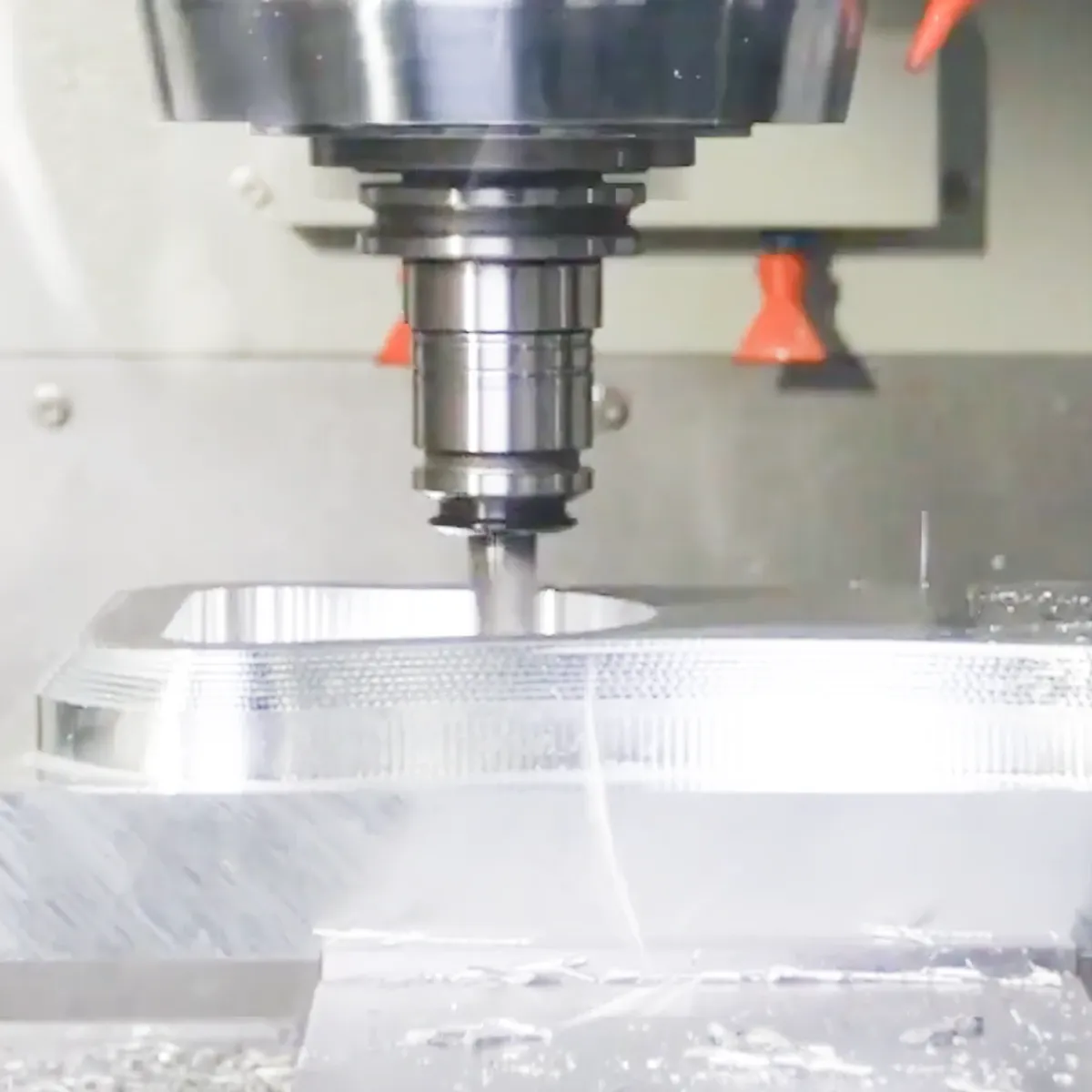
Aluminum CNC machining at Leading Top Union delivers precision components for demanding industrial applications where weight reduction, corrosion resistance, and thermal conductivity are critical. Machining center capabilities include 3-axis, 4-axis, and 5-axis simultaneous machining with spindle speeds reaching 18,000 RPM, enabling complex geometries and tight tolerances of ±0.01mm on critical features. All standard aluminum alloys are processed including 6061-T6 for structural components, 7075-T6 for high-stress aerospace-grade parts, 5083 for marine environments, 2024-T3 for fatigue-critical assemblies, and 6082-T6 for European-standard applications. Each alloy is selected based on specific mechanical property requirements, with yield strengths ranging from 240 MPa for 6061-T6 to 505 MPa for 7075-T6, ensuring optimal performance under operational loads.
A high-speed machining strategy at 18,000 RPM combined with optimized tool paths achieves as-machined surface finishes of Ra 0.4μm to Ra 1.6μm, with typical finishes at Ra 0.8μm for anodizing-ready surfaces. This eliminates secondary finishing operations for many applications, reducing lead times and per-part costs. For thin-wall components, wall thicknesses down to 0.5mm are maintained with minimal deflection through adaptive machining algorithms that adjust feed rates based on real-time cutting forces. This capability is essential for heat exchanger fins, electronic enclosures, and lightweight structural brackets where material removal must be maximized without compromising dimensional stability. No-burr machining protocols use climb milling strategies and specialized tool geometries to produce clean edges on all features, including internal threads, slots, and drilled holes. Typical cutting parameters for 6061-T6 include chip loads of 0.05-0.15 mm/tooth and radial depths of cut up to 5mm, while 7075-T6 requires reduced speeds by 15-20% to manage heat generation and prevent work hardening during high-volume production runs exceeding 1000 parts.
All aluminum CNC machined parts are produced under ISO 3834-2 quality control procedures, with EN 1090-2 EXC3 execution class for structural components and AWS D1.1 compliance for welded assemblies. Material traceability is maintained from mill certificates through final inspection, with each batch documented per EN 10204 Type 3.1 certification requirements. Temperature-controlled machining environment maintains 20°C ±1°C to eliminate thermal expansion effects during precision operations, particularly important for parts with tolerances below ±0.02mm. For large-format components, machining envelope accommodates parts up to 2000mm x 1000mm x 800mm with maximum workpiece weights of 3000 kg, supporting everything from small instrument brackets to large pump housings and structural frames for offshore applications. Additional capabilities include thread milling per ASME B1.20.1 for pipe threads up to 4 inches NPT, with thread class tolerances of 2A/2B for standard applications and 3A/3B for critical sealing interfaces in high-pressure hydraulic systems operating at up to 350 bar.
Applications & Industries
In the oil and gas sector, aluminum CNC machined components serve critical roles in upstream, midstream, and downstream operations. Valve bodies, actuator housings, and instrument manifolds are produced from 6061-T6 and 7075-T6 alloys for topside and subsea applications where weight reduction on offshore platforms reduces structural loading. These components must withstand operating pressures up to 690 bar (10,000 psi) and temperatures from -50°C to +150°C, requiring precise thread forms per API 7-2 and sealing surfaces machined to Ra 0.4μm for reliable O-ring sealing. Machining processes maintain concentricity within 0.02mm on bore diameters up to 300mm, ensuring consistent performance in choke valves, control valves, and flow measurement devices used in sour gas environments per NACE MR0175/ISO 15156 requirements. For subsea tree components, surface finishes on sealing faces are held to Ra 0.2μm using diamond-tipped tooling, with dimensional verification via coordinate measuring machines at 0.5μm resolution to meet API 6A material specifications.
Offshore wind energy applications demand aluminum components that combine lightweight construction with corrosion resistance for 25-year service life in marine atmospheres. Pitch control housings, yaw drive brackets, and cable management systems are machined from 5083-H116 and 6082-T6 alloys, which offer excellent resistance to pitting and stress corrosion cracking in saltwater environments. These parts often feature complex internal cooling channels machined to ±0.05mm tolerances for thermal management of power electronics. Thin-wall machining capability down to 0.5mm enables weight-optimized designs for nacelle components, where every kilogram reduction translates to lower tower loading and foundation costs. All offshore wind components receive chromate conversion coating per MIL-DTL-5541 Type I or Type II prior to assembly, providing corrosion protection that exceeds DNV-GL offshore standards. Fatigue testing per ASTM E466 demonstrates that machined 5083-H116 components maintain 10 million cycle life at stress amplitudes of 150 MPa, critical for components subjected to continuous vibration from turbine operation over decades of service.
For power generation equipment, including gas turbines, steam turbines, and diesel generators, aluminum components are machined that operate in high-temperature environments up to 200°C continuous service. Compressor blades, diffuser rings, and bearing housings from 2024-T3 and 7075-T6 alloys require dimensional stability under thermal cycling, achieved through stress-relief machining sequences that remove material in stages to prevent distortion. Five-axis machining centers produce airfoil profiles with surface finishes of Ra 0.8μm and profile tolerances of ±0.1mm, critical for aerodynamic efficiency in compressor stages. For generator cooling systems, heat exchanger plates and fan blades are machined from 6061-T6 with wall thicknesses of 1.0mm to 2.5mm, maintaining flatness within 0.05mm over 500mm lengths to ensure uniform airflow and heat transfer rates exceeding 200 W/m²K. Thermal conductivity of 6061-T6 at 167 W/mK enables efficient heat dissipation in power electronics enclosures, with machined fin geometries achieving surface area densities up to 500 m²/m³ for compact cooling solutions in confined turbine housings.
Mining and mineral processing equipment relies on aluminum CNC machined parts for their high strength-to-weight ratio and wear resistance. Screen decks, classifier components, and conveyor system parts are produced from 5083-H116 and 6082-T6 alloys, which maintain impact resistance at temperatures as low as -40°C for arctic mining operations. These components must withstand abrasive slurries and heavy impact loads, requiring machined surfaces with hardness values of 100-130 HB for extended service life. Machining processes achieve positional tolerances of ±0.02mm on bolt patterns and locating features, ensuring interchangeability across multiple assemblies in large-scale mining operations. For processing plant automation, sensor housings and actuator brackets are machined from 6061-T6 with IP67-rated sealing surfaces, maintaining ingress protection through precise O-ring groove dimensions machined to ±0.05mm tolerances. Abrasion resistance testing per ASTM G65 shows that machined 5083-H116 surfaces experience less than 0.5mm volume loss after 6000 revolutions, providing reliable performance in slurry transport systems handling particles up to 10mm in diameter at flow velocities of 5 m/s.
Why Choose Leading Top Union for Aluminum CNC Machining
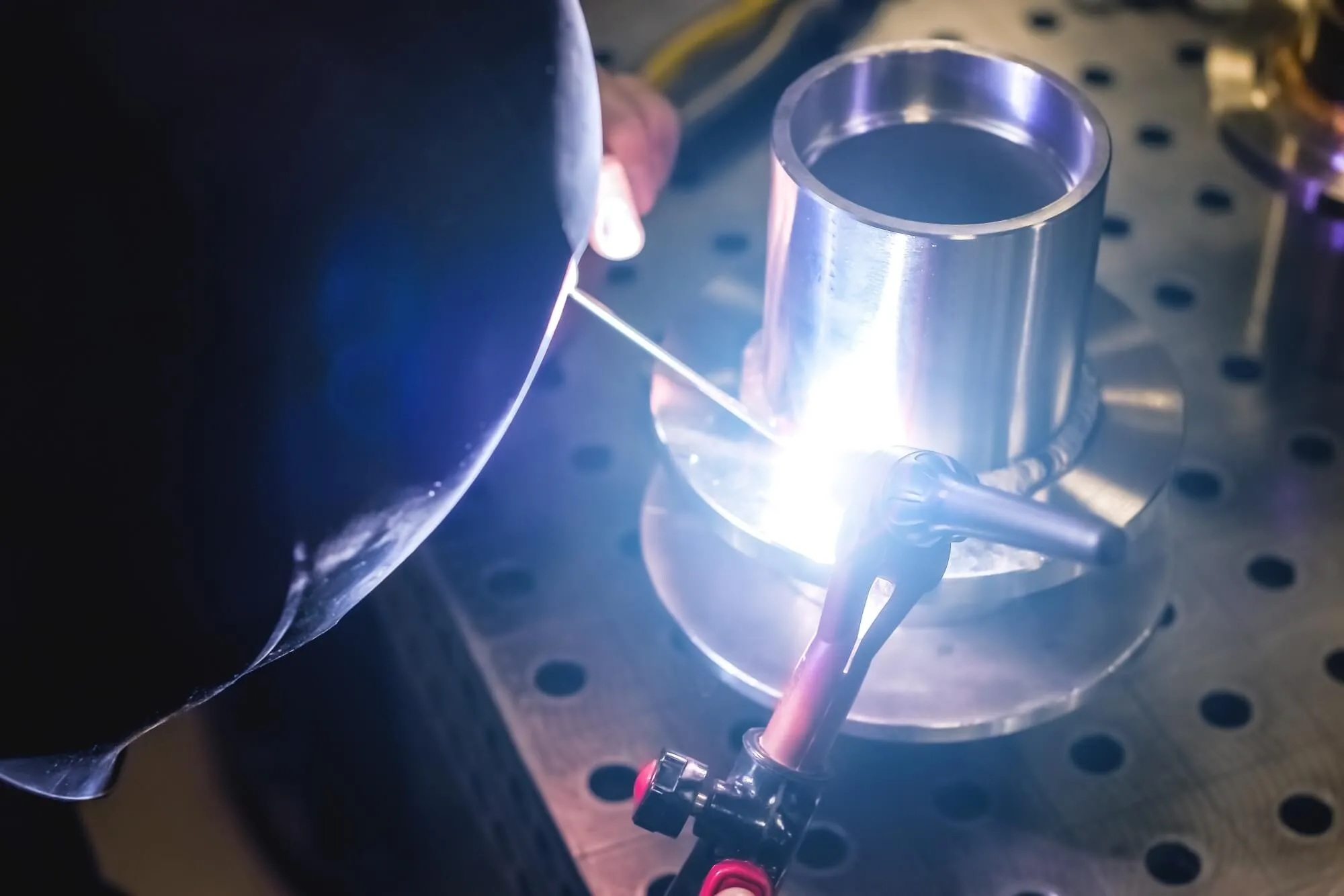
Leading Top Union combines ISO 3834-2 certified welding quality management with EN 1090-2 EXC3 execution class and AWS D1.1 compliance, providing a single-source solution for aluminum components that require both machining and welded assemblies. The quality management system includes first-article inspection reports with full dimensional data per ASME Y14.5-2018 GD&T standards, CMM inspection with 0.5μm resolution, and material certification traceable to mill sources. For critical applications in nuclear power generation and offshore oil and gas, NDT services are offered including dye penetrant testing per ASTM E1417 and ultrasonic inspection per ASTM E114, ensuring internal soundness on machined components with wall thicknesses below 2.0mm. Quality documentation packages meet the requirements of major EPC contractors and classification societies including DNV, Lloyd's Register, and Bureau Veritas. Statistical process control is implemented on high-volume production runs, with capability indices (Cpk) maintained above 1.33 for all critical dimensions, ensuring less than 66 defective parts per million for consistent quality across production batches exceeding 10,000 units annually.
Technical engineering team provides design-for-manufacturability support during the quotation phase, analyzing part geometry to optimize tool paths, reduce cycle times, and eliminate potential quality issues before production begins. A library of over 500 validated tool path programs is maintained for common aluminum part families, enabling rapid setup changes and consistent quality across repeat orders. For prototype and low-volume production runs, same-day quoting and lead times as short as 5 business days are offered for simple geometries, scaling to 15-20 business days for complex multi-axis parts requiring extensive inspection. Production capacity exceeds 5000 machined aluminum components per month across three shifts, supported by automated pallet systems that reduce non-cutting time by 40% compared to manual loading. This capacity ensures on-time delivery performance consistently above 98% for scheduled orders, with expedited options available for emergency maintenance requirements. Cost analysis for typical 6061-T6 parts shows a 25% reduction in per-part cost for volumes above 500 units through optimized tool life management, with carbide end mills achieving 2000-3000 linear meters of cutting before replacement at feed rates of 0.1 mm/tooth and axial depths of 2mm.