Product Overview
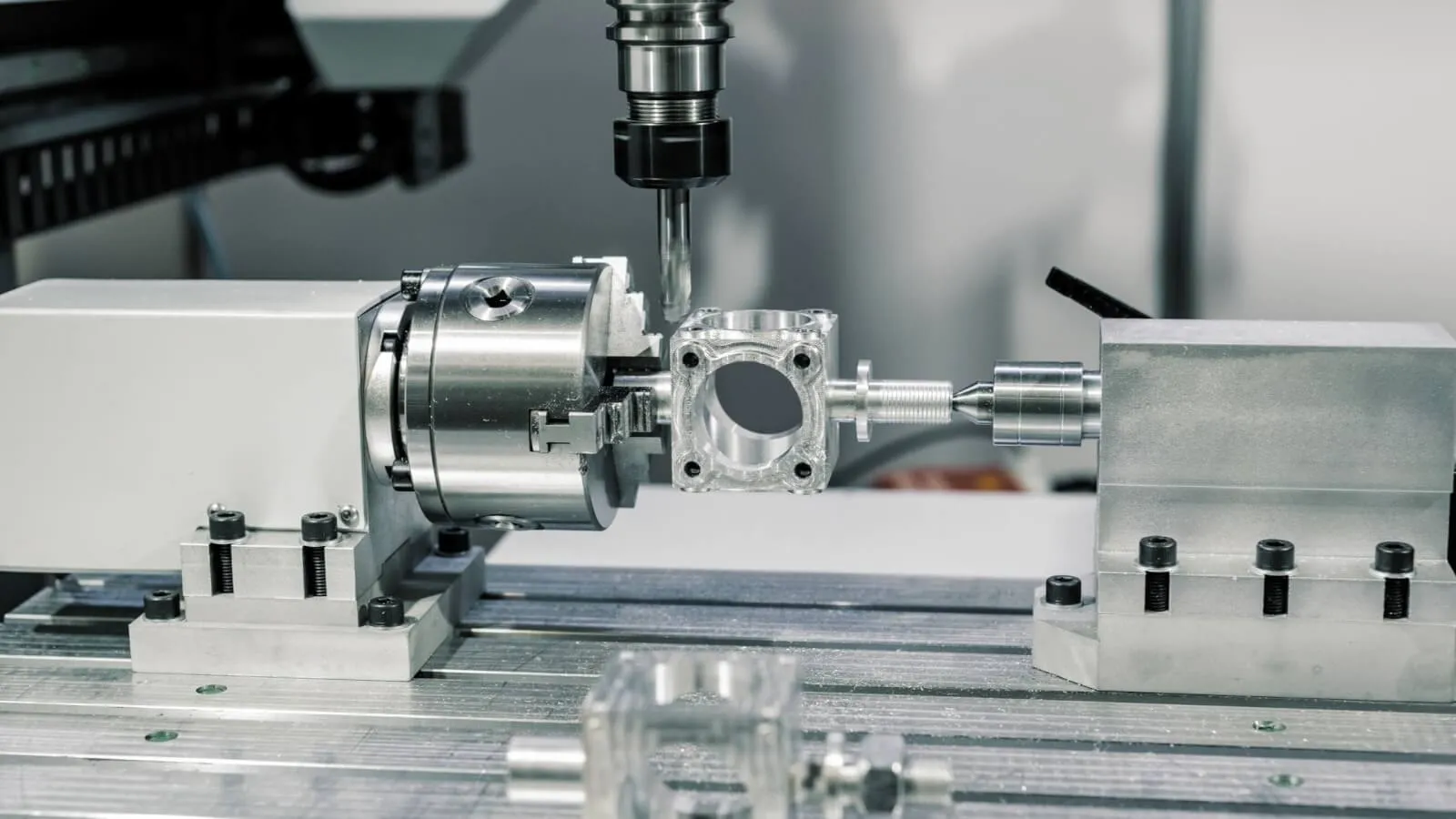
CNC drilling and tapping capabilities are engineered for high-volume production environments where throughput and repeatability are critical. The multi-spindle configuration allows simultaneous drilling of multiple holes, reducing cycle times by up to 60% compared to single-spindle operations on complex hole patterns. For a typical flange plate requiring 24 holes of 18mm diameter on a 600mm bolt circle, the system achieves a cycle time of under 4 minutes, including automatic tool changes and in-process measurement verification. The spindle speeds reaching 20,000 RPM enable efficient machining of both ferrous and non-ferrous materials, from structural steel grades S235JR to S460ML, as well as duplex stainless steels and aluminum alloys common in offshore and marine applications.
Deep Hole Drilling Capabilities
Deep hole drilling is a specialized capability that sets our service apart, particularly for components requiring oil passages, hydraulic ports, or cooling channels. Depth-to-diameter ratios of 40:1 are achieved using standard twist drilling techniques, and up to 100:1 with gun drilling methods, all while maintaining hole straightness within 0.1mm per 100mm of depth. This is critical for applications such as hydraulic cylinder blocks, valve bodies, and heat exchanger tube sheets where misaligned holes can cause flow restrictions or premature wear. The process is supported by high-pressure coolant systems delivering 70 bar through the spindle, ensuring effective chip evacuation and thermal stability even at depths exceeding 500mm in materials like 4140 alloy steel or 316L stainless steel.
Position Accuracy and Quality Control
Position accuracy of ±0.05mm on hole patterns is maintained through a combination of rigid machine construction, precision ball screws with preloaded nuts, and closed-loop feedback from linear encoders. This tolerance is verified on every production run using CMM sampling per ISO 1938-2, with statistical process control charts maintained for all critical features. The work envelope of 3000 × 2000 × 1000mm accommodates large fabrications such as wind turbine tower flanges, mining equipment base plates, and pressure vessel nozzles. The automated tool measurement system uses laser probes to set tool lengths and diameters within 2 microns, compensating for thermal expansion and tool wear automatically, which ensures consistent thread quality across production runs of 500+ parts without manual intervention.
Thread Tapping Standards and Materials
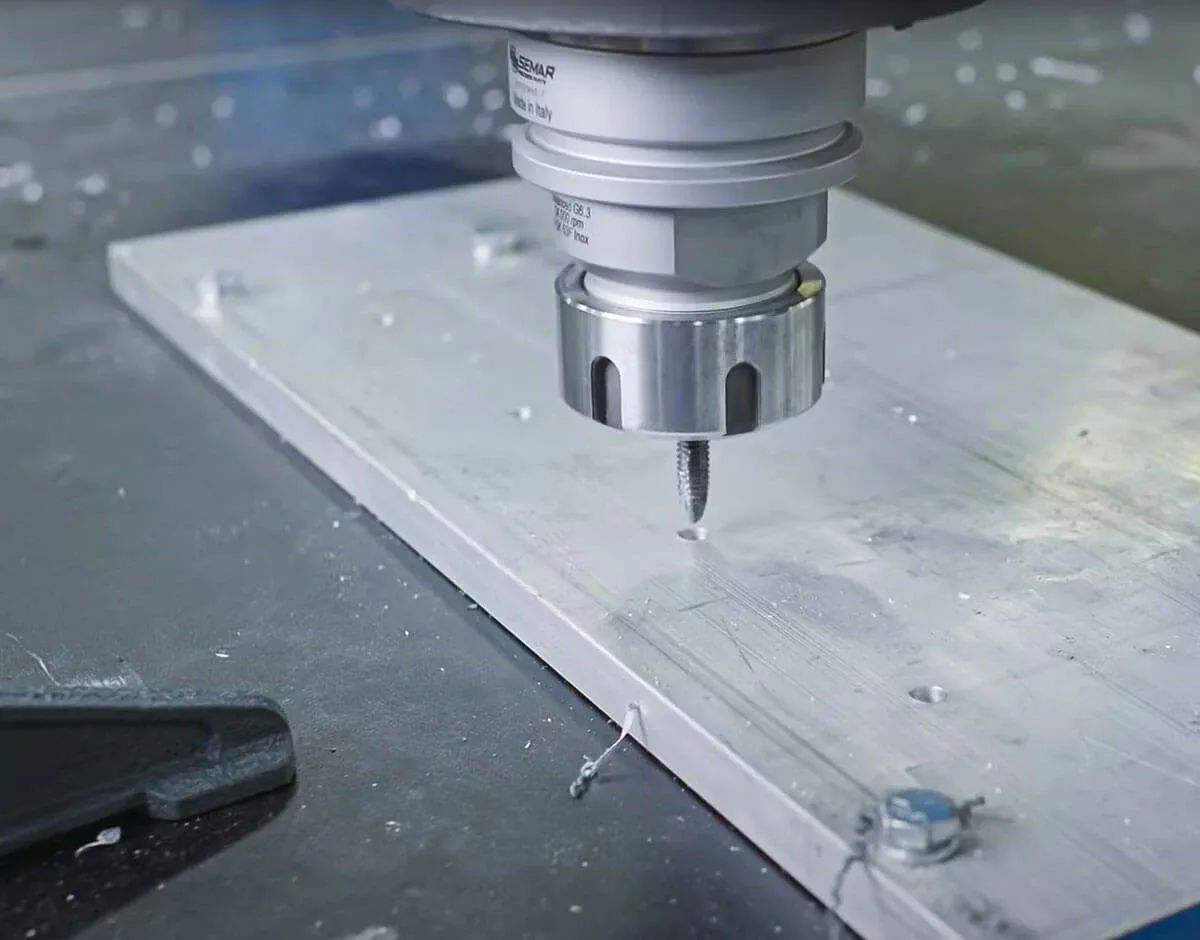
Thread tapping from M3 to M64 covers a broad spectrum of fastener requirements, from small instrumentation ports to large structural bolting connections. For metric threads, compliance with ISO 6H/6g tolerances is maintained, while unified threads follow ASME B1.1 Class 2A/2B standards. The tapping process uses synchronized rigid tapping cycles that match spindle rotation to feed rate within 0.01mm per revolution, eliminating thread pitch errors common in floating tap holders. For high-strength materials like Inconel 625 or 17-4 PH stainless steel, thread-forming taps are employed that produce stronger threads through cold working, achieving tensile strengths exceeding 80% of base material properties. This is validated through pull-out testing per ASTM F606 for critical applications in petrochemical and power generation equipment.
Applications & Industries
In the oil and gas sector, CNC drilling and tapping services support the fabrication of wellhead equipment, Christmas trees, and manifold systems that must withstand pressures up to 15,000 psi and temperatures from -46°C to 250°C. For a recent subsea manifold project, 48 holes of 32mm diameter were drilled through 80mm thick F22 forged steel, maintaining position accuracy within ±0.05mm across a 1200mm bolt circle. The tapped threads, M36 x 3mm pitch, were inspected with thread plug gauges and ultrasonic testing to verify full thread engagement at 90% depth. These components comply with API 6A and NACE MR0175/ISO 15156 requirements for sour service environments, with all drilling and tapping performed under controlled coolant conditions to prevent hydrogen embrittlement.
Offshore Wind Energy Applications
Offshore wind energy applications demand high-precision drilling and tapping for tower flanges, transition pieces, and nacelle components that must endure dynamic loads exceeding 20 MN and fatigue cycles of 10^7 over a 25-year design life. Gun drilling capability is particularly valuable for tower flange bolt holes requiring L/D ratios of 80:1 through 150mm thick S355NL steel plates. The hole straightness tolerance of 0.05mm per 100mm ensures proper bolt alignment and load distribution across the flange connection. Thread tapping for M64 x 4mm bolts, common in monopile foundations, is performed with custom ground taps featuring TiAlN coatings to handle the interrupted cuts encountered in flame-cut plate edges. All work follows EN 1090-2 EXC3 execution class requirements, with documented traceability for every hole and thread.
Mining and Mineral Processing Equipment
Mining and mineral processing equipment requires robust drilling and tapping for crusher frames, screen decks, and conveyor components that operate in abrasive environments with particulate contamination. Multi-spindle drilling reduces cycle times by 50% on wear plate components requiring 100+ holes of 12mm diameter for bolt-on liner attachments. The position accuracy of ±0.05mm ensures liner alignment within 0.2mm across 3-meter sections, preventing premature wear from misaligned fasteners. For heavy machinery base plates in Hardox 400 or 500 materials, drilling through thicknesses up to 100mm is performed with carbide-tipped drills running at 80-120 surface meters per minute, achieving tool life of 200+ holes per edge. Thread tapping for M30 x 3.5mm bolts uses spiral flute taps with through-spindle coolant at 50 bar to clear chips from deep blind holes.
Power Generation Precision Requirements
Power generation applications, including gas and steam turbines, heat recovery steam generators, and nuclear reactor components, demand the highest levels of precision and documentation. CNC drilling achieves hole position tolerances of ±0.05mm on turbine diaphragm rings with 200+ cooling holes of 6mm diameter drilled at compound angles up to 30 degrees. The deep hole drilling capability is essential for rotor bore cooling channels requiring L/D ratios of 60:1 in CrMoV steels. Thread tapping for M16 to M48 fasteners in turbine casings follows ASME B16.5 flange standards, with all threads inspected using optical comparators at 20x magnification. For nuclear applications, full traceability is maintained per ASME NQA-1, including material heat numbers, tool serial numbers, and inspection records for every drilled and tapped feature.
Why Choose Leading Top Union for CNC Drilling & Tapping
ISO 3834-2 certification for welding quality management extends to all machining operations, ensuring that drilling and tapping processes are controlled under the same rigorous quality system. This means every hole location and thread is documented with digital inspection reports that include actual measured values, not just pass/fail results. For EPC firms requiring third-party verification, full dimensional inspection reports are provided per ISO 2768-mK or customer-specified tolerances, with CMM data exportable in PDF or Excel formats. The quality management system is audited annually by TÜV SÜD, giving procurement engineers confidence that processes meet international standards for traceability and repeatability across production runs of 1 to 10,000 parts.
Production Efficiency and Quality Metrics
The combination of multi-spindle drilling and automated tool measurement delivers consistent quality at production volumes that single-source machine shops cannot match. For a typical order of 200 flanges requiring 24 drilled and tapped holes each, a cycle time of 3.5 minutes per part translates to 700 minutes total machining time, compared to 1,400 minutes on conventional equipment. This 50% reduction in cycle time is achieved without compromising accuracy, as the laser tool measurement system automatically compensates for tool wear after every 50 holes. The result is a CpK value of 1.67 or higher on hole position and thread pitch, exceeding the 1.33 minimum required by most automotive and heavy equipment specifications. The Suzhou facility operates 24/7 with redundant spindle capacity, ensuring on-time delivery even for rush orders with 2-week lead times.
Material Versatility and Process Optimization
Material versatility is a key advantage, as experience drilling and tapping over 200 different alloys includes carbon steels, stainless steels, nickel alloys, titanium, and aluminum. For each material, documented cutting parameters including spindle speed, feed rate, peck depth, and coolant pressure are maintained, optimized through design of experiments methodology. This database, built from over 15 years of production experience, allows quoting and delivery of complex parts without trial-and-error setup. For example, drilling 8mm diameter holes through 300mm of Inconel 718 requires specific parameters: 1,200 RPM spindle speed, 0.02mm/rev feed rate, and 2mm peck depth with 70 bar coolant pressure. Engineers select tool coatings—TiAlN for steels, AlTiN for stainless, or diamond-like carbon for aluminum—based on material and depth requirements, maximizing tool life and surface finish.
Continuous Improvement and Customer Support
Commitment to continuous improvement is reflected in investment in new CNC drilling centers with thermal compensation systems that maintain accuracy even during 12-hour production runs. The machines are installed on vibration-isolated foundations with active temperature control to ±1°C, ensuring that dimensional stability is maintained regardless of ambient conditions. For customers requiring special thread forms such as NPT, BSPT, or ACME threads, a library of over 500 tap geometries is maintained, and custom ground taps can be produced within 5 business days. Quality engineers work directly with customer procurement teams to review drawing requirements, identify potential issues such as thin wall sections or intersecting holes, and propose solutions before production begins. This proactive approach has resulted in a first-pass yield rate of 98.5% for CNC drilling and tapping operations, with corrective actions implemented within 24 hours for any non-conformance.