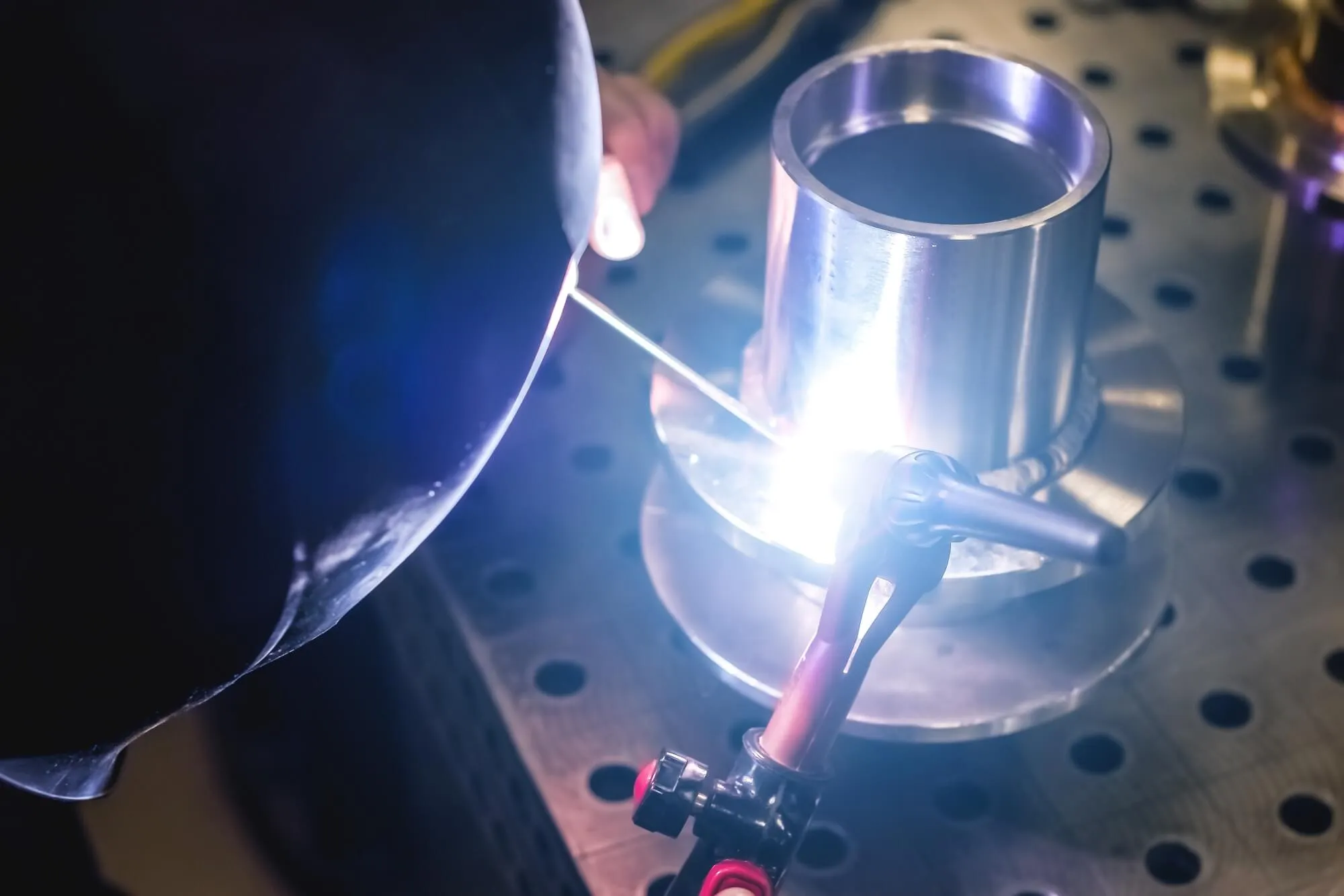
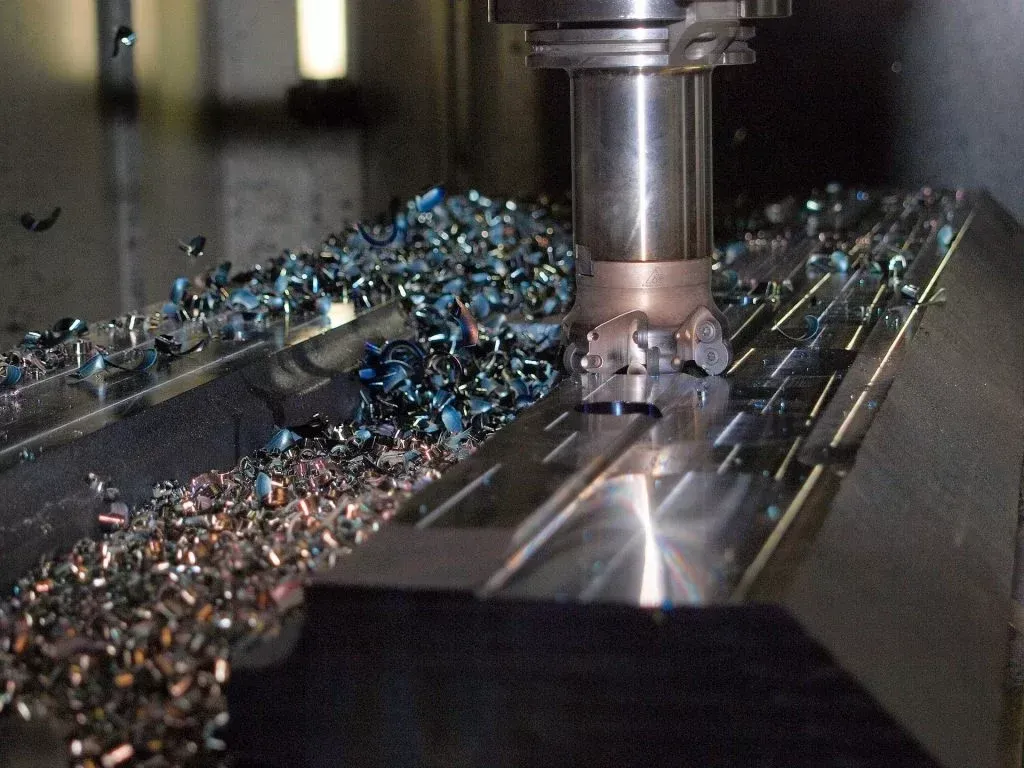
Product Overview
Steel CNC machining at Leading Top Union delivers precision components from a comprehensive range of carbon, alloy, and tool steel grades, including A36, 1018, 1045, 4140, 4340, 8620, D2, H13, and P20. The Suzhou facility operates 3-axis, 4-axis, and 5-axis CNC milling centers and turning centers with positioning accuracy of ±0.005 mm and repeatability of ±0.002 mm. Parts up to 2000 mm in length and 800 mm in diameter are machined, with tolerances held to ISO 2768-f or tighter per customer specifications. All raw materials are sourced with full mill certificates (EN 10204 Type 3.1 or 3.2) ensuring complete traceability from melt to finished part.
A process engineering team develops optimized cutting parameters for each steel grade to balance tool life, surface finish, and cycle time. For example, machining 4140 alloy steel in the annealed condition (HRC 18-22) uses carbide tooling at cutting speeds of 150-200 m/min, while 4340 hardened to HRC 45-50 requires CBN inserts at 80-120 m/min. Surface finishes from Ra 0.8 μm for sealing surfaces to Ra 6.3 μm for non-critical areas are maintained, verified with Mitutoyo profilometers. For post-heat-treatment machining, hardness levels up to HRC 62 are accommodated using CBN and ceramic tooling, with documented tool wear monitoring to maintain dimensional stability across production runs of 50 to 10,000 pieces. Specific feed rates for 8620 case-hardened steel are set at 0.12-0.18 mm/rev to prevent work hardening, while 1045 carbon steel is machined at 0.25-0.35 mm/rev for optimal chip evacuation. Tool life is tracked per insert edge, with carbide tooling achieving 30-45 minutes of cutting time per edge on 4140, reducing to 15-20 minutes on hardened D2 tool steel. Coolant selection is critical: a 10% semi-synthetic emulsion is used for alloy steels, while straight oil is applied for tool steels to minimize thermal cracking. Chip breakers are programmed for each grade to avoid stringy chips that can entangle tooling, with 1045 producing acceptable 6-9 chips per revolution and 4340 requiring tighter 8-12 chip breaks per revolution.
Heat treatment coordination is integral to the steel CNC machining service. Partnerships with NADCAP-accredited thermal processing facilities enable quench and tempering (Q&T), carburizing, nitriding, and induction hardening. For components requiring case hardening, carburizing to depths of 0.5-2.0 mm with case hardness of HRC 58-62 is performed, then the core is machined to final dimensions before hardening. Nitriding achieves surface hardness of 900-1100 HV with minimal distortion, ideal for gears and shafts. Stress relieving at 550-650°C for welded assemblies and normalized steel parts eliminates residual stresses before final machining, ensuring long-term dimensional stability under cyclic loading conditions. For 4140 shafts over 500 mm length, a pre-machining stress relief at 600°C for 2 hours reduces distortion by up to 40% during final grinding. Carburizing depths are verified via microhardness testing per ASTM E384, with case profiles documented to ensure effective case depth of 0.8-1.2 mm for gear teeth. Induction hardening of 1045 steel shafts to HRC 50-55 at depths of 1.5-3.0 mm is performed using a 10 kHz frequency, with tempering at 180°C for 1 hour to reduce brittleness. Cryogenic treatment at -80°C for tool steels like D2 is offered to stabilize retained austenite, improving wear resistance by 15-25% in cutting dies.
Applications & Industries
In the oil and gas sector, steel CNC machining produces valve bodies, Christmas tree components, and manifold blocks from 4130 and 4140 alloy steel, meeting NACE MR0175/ISO 15156 requirements for sour service. These components often require hardness below HRC 22 to resist sulfide stress cracking, achieved through precise Q&T heat treatment followed by machining to tolerances of ±0.025 mm on critical sealing surfaces. API 6A flanges up to 500 mm diameter are machined with ring groove finishes of Ra 1.6 μm, and pressure-containing parts for subsea applications rated to 15,000 psi are delivered. Material traceability includes heat numbers, mechanical test reports, and PMI verification for every component. For valve stems machined from 17-4PH stainless steel, hardness of HRC 33-38 is maintained after H900 aging, with threads cut to class 3A tolerance per ASME B1.1. Helium leak testing at 10^-6 mbar·L/s is performed on all pressure-containing parts to verify seal integrity. The facility also machines B7 stud bolts from 4140 steel to ASTM A193, with threads rolled after heat treatment to achieve tensile strengths of 860-1035 MPa and elongation above 16%.
For offshore wind and marine applications, structural components are machined from S355J2+N and S460ML steel per EN 1090-2 EXC3 and DNV-GL standards. These include yaw bearing housings, pitch system brackets, and tower connection rings machined to tolerances of ±0.1 mm on bolt hole patterns with diameters up to 4 meters. Surface treatments such as hot-dip galvanizing (ISO 1461) or zinc-rich painting (ISO 12944 C5-M) are applied after machining to provide corrosion resistance in offshore environments. Propeller shafts and rudder stocks are produced from 4340 and 8620 alloy steel, with induction hardening of bearing journals to HRC 50-55 and final grinding to Ra 0.4 μm. For wind turbine gearbox housings machined from EN-GJS-400-18-LT ductile iron, dimensional stability is ensured through a 2-hour stress relief at 550°C before final boring operations. Bolt hole patterns for tower flanges are drilled with a tolerance of ±0.05 mm on hole-to-hole spacing, verified using a coordinate measuring machine with a 0.5 mm probe. Marine propeller shafts require a surface roughness of Ra 0.2 μm on bearing areas, achieved through superfinishing with a 1200-grit abrasive belt after grinding.
In power generation and petrochemical industries, steel CNC machining serves turbine components, pump housings, and compressor rotors from 1045, 4140, and 4340 steel. For steam turbine blade roots machined from 403 stainless steel, dovetail tolerances of ±0.013 mm are held using custom-ground form tools on 5-axis machines. Heat treatment cycles include double tempering for 4340 at 540-650°C to achieve tensile strengths of 1100-1300 MPa with impact toughness above 27 J at -40°C. Boiler feed pump shafts from 17-4PH stainless steel (H1150 condition) with hardness of HRC 28-35 are machined to runout tolerances of 0.025 mm TIR over 2-meter lengths, critical for high-speed rotating equipment operating at 3,600-12,000 RPM. For compressor rotors, balance tolerances per ISO 1940-1 G2.5 are achieved using dynamic balancing machines with a sensitivity of 0.1 g·mm. Turbine casing flanges from 1.25Cr-0.5Mo steel per ASTM A182 F11 are machined to a flatness of 0.05 mm per 300 mm to ensure leak-tight joints under high-pressure steam conditions. Weld overlay of Inconel 625 on valve seats is applied to a thickness of 3 mm, then machined to Ra 0.8 μm for erosion resistance in high-temperature service up to 650°C.
Mining and heavy equipment applications demand wear-resistant components machined from tool steels like D2, H13, and S7. Crusher wear plates, bucket teeth adapters, and shear blades from D2 tool steel hardened to HRC 58-60 are produced, with wire EDM finishing to achieve clearance tolerances of ±0.01 mm. For hot work applications such as die casting cores and forging dies, H13 steel is machined in the annealed condition (HRC 18-22), then vacuum heat treated to HRC 46-50 with nitrogen gas quenching to minimize distortion. Final machining with CBN tooling achieves surface finishes of Ra 0.8 μm on cavity surfaces, extending die life by 20-30% compared to conventional machining methods. For mining drill bits machined from S7 tool steel, hardness of HRC 54-56 is achieved through oil quenching and double tempering, with carbide inserts brazed into pre-machined pockets. Shear blades for scrap metal processing are machined from D2 steel with a hardness of HRC 60-62, then wire EDM cut to a 3-degree clearance angle for optimal shearing performance. Wear plates for chutes and hoppers are produced from AR400 steel (HRC 36-40) with drilled mounting holes to ±0.2 mm tolerance, and hardfacing with chromium carbide overlay to a thickness of 6 mm for extended service life in abrasive environments.
Why Choose Leading Top Union for Steel CNC Machining
Leading Top Union holds ISO 3834-2, EN 1090-2 EXC3, and AWS D1.1 certifications, demonstrating a commitment to quality in steel fabrication and machining. The quality management system includes first article inspection (FAI) per AS9102 for every new production run, with dimensional reports using CMM (Zeiss Contura G2) with accuracy of 1.9 + L/300 μm. In-process inspection at critical machining stages is performed, with statistical process control (SPC) for high-volume orders to maintain CpK values above 1.67. All outgoing parts receive final inspection including hardness testing (Rockwell C), surface finish measurement, and dimensional verification against engineering drawings. For critical aerospace components, a 100% dimensional inspection is conducted using a laser scanner with a resolution of 0.02 mm, generating a full 3D comparison report against the CAD model. Non-destructive testing options include magnetic particle inspection (MPI) per ASTM E1444 for surface cracks and ultrasonic testing (UT) per ASTM E213 for subsurface defects in shafts and plates.
The technical team provides engineering support for design for manufacturability (DFM) reviews, helping clients optimize part geometries for CNC machining efficiency. Appropriate steel grades are recommended based on service conditions, heat treatment requirements, and cost constraints. For example, replacing 4340 with 4140 for non-critical shafts can reduce material costs by 15-20% while maintaining adequate strength. Advice on surface treatment selection is also provided: black oxide for corrosion resistance in dry environments, zinc plating (ASTM B633) for indoor applications, and hard chrome plating (AMS 2460) for wear surfaces requiring hardness above HRC 60. Lead times for prototype quantities (1-10 pieces) typically range 2-4 weeks, while production volumes (100-10,000 pieces) require 4-8 weeks depending on complexity and heat treatment cycles. For urgent orders, a 24-hour rush service is available for simple parts with standard material stock, subject to machine availability. A dedicated project manager is assigned to each order, providing weekly status updates and resolving any technical issues via email or phone within 4 business hours. Custom packaging per customer specifications, including wooden crates for export per ISPM-15, is offered at no additional cost for orders over $5,000.