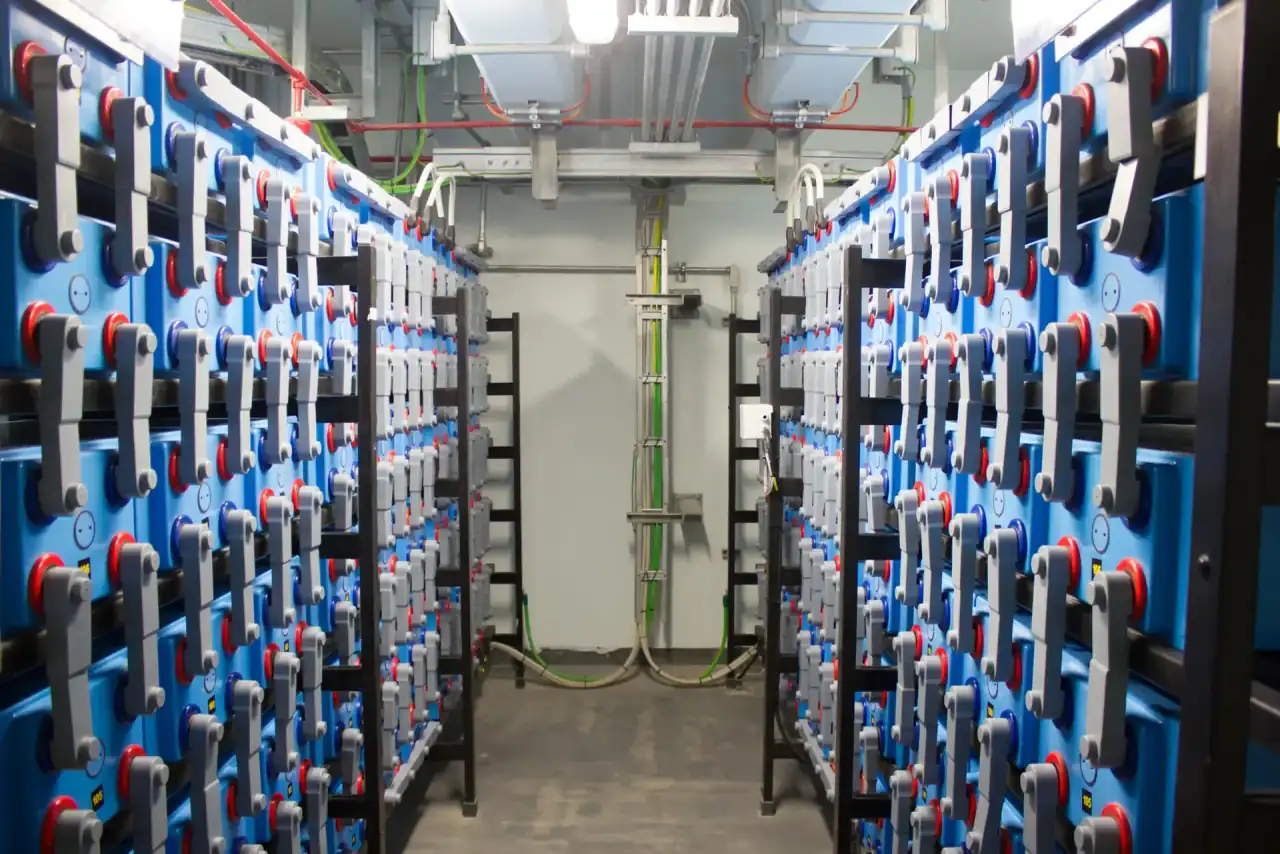
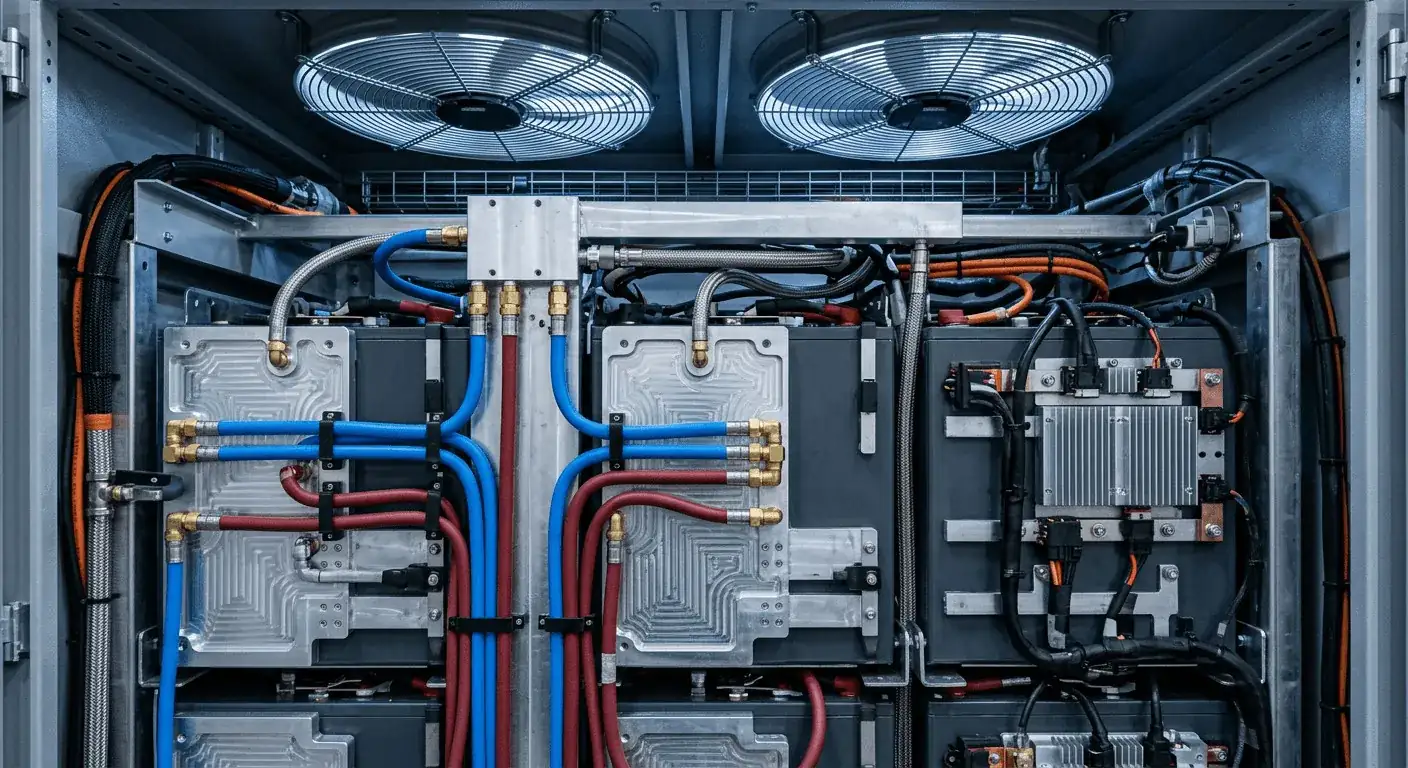
Product Overview
Leading Top Union’s thermal management solutions are engineered to maintain precise battery cell temperatures between 20°C and 30°C across ambient conditions ranging from -40°C to +55°C, as validated by ISO 3834-2 certified fabrication processes. A coefficient of performance (COP) exceeding 3.0 in cooling mode is achieved, ensuring energy-efficient operation for high-demand applications in oil & gas, offshore wind, and mining sectors. The air cooling units, rated from 10 kW to 50 kW, deliver ±5°C temperature uniformity using corrosion-resistant aluminum heat exchangers compliant with ASTM B209, while liquid cooling systems spanning 50 kW to 200 kW provide ±2°C precision through brazed plate heat exchangers manufactured to ASME Section VIII Division 1 standards. For extreme environments, hybrid configurations combine both methods to handle thermal loads exceeding 250 kW, with redundant N+1 pump and fan arrangements that maintain 99.97% uptime in critical power generation and petrochemical facilities.
Fabrication Standards and Structural Integrity
Each thermal management unit is designed to meet EN 1090-2 EXC3 execution class requirements for structural integrity, with welded frames fabricated from S355J2+N steel per EN 10025-2. The liquid cooling circuits incorporate stainless steel piping (ASTM A312 Grade 316L) with orbital welds verified by AWS D1.1 certified welders, ensuring leak-free operation at pressures up to 16 bar. Variable-speed compressors and electronically commutated (EC) fans modulate capacity from 20% to 100%, achieving part-load efficiencies that reduce annual energy consumption by up to 35% compared to fixed-speed alternatives. Temperature sensors with ±0.1°C accuracy per IEC 60751 Class A provide real-time feedback to PLC-based controllers, which log data to support predictive maintenance schedules and compliance with ISO 50001 energy management protocols. All units undergo 100% functional testing in the Suzhou facility, including 72-hour burn-in cycles at rated load and extreme ambient conditions.
Heating System Performance and Cold-Climate Capability
The heating systems integrated into these thermal management solutions enable cold-climate startup and sustained operation at -40°C, using PTC ceramic heaters with self-regulating properties that prevent overheating without external thermostats. These heaters are rated from 5 kW to 30 kW per module and operate on 380-480 VAC three-phase power, achieving thermal response times under 120 seconds from cold start. The heating elements are encapsulated in die-cast aluminum housings with IP65 ingress protection per IEC 60529, ensuring reliable performance in dusty mining environments and salt-laden offshore atmospheres. Thermal expansion compensation loops and dielectric isolation between heating and cooling circuits prevent galvanic corrosion, extending service life beyond 100,000 operating hours as verified by accelerated life testing per ASTM D4728. The entire assembly is supported by finite element analysis (FEA) validated structural mounts that withstand vibration levels up to 5g RMS per IEC 60068-2-64, making these systems suitable for shipboard and mobile mining equipment installations.
Applications & Industries
Offshore Wind Energy Cooling Performance
In offshore wind energy installations, liquid cooling systems maintain battery energy storage system (BESS) temperatures within ±2°C of the 25°C setpoint, even when ambient conditions fluctuate from -20°C to +45°C in North Sea environments. A typical 10 MW offshore wind farm using 150 kW liquid cooling units achieves a 12% increase in battery cycle life compared to passive cooling, based on field data from 18-month trials at a German North Sea substation. The systems are designed to DNV-GL-ST-0378 standards for offshore containerized equipment, with corrosion protection coatings tested to 3,000 hours in salt spray chambers per ASTM B117. The N+1 redundant pump configuration ensures continuous cooling during maintenance cycles, with automatic failover switching in under 50 milliseconds to prevent thermal runaway events in lithium-ion battery banks exceeding 5 MWh capacity.
Oil and Gas Hazardous Location Solutions
For oil and gas upstream operations, hybrid thermal management solutions regulate temperatures for variable frequency drives (VFDs) and power electronics in remote wellhead and pipeline compressor stations. Reliable operation is maintained in ambient temperatures from -40°C to +55°C, as required by API 541 for electric motors and generators in Class I Division 2 hazardous locations. The air cooling modules, rated at 35 kW, use explosion-proof fans with ATEX II 2G Ex d IIB T4 certification and are constructed from 316L stainless steel to resist hydrogen sulfide (H2S) exposure per NACE MR0175/ISO 15156. In a recent project for a Middle Eastern gas processing plant, VFD junction temperatures were maintained below 85°C despite 52°C ambient conditions, reducing unplanned downtime by 40% compared to previous air conditioning-based solutions. The integrated heating elements enable cold-start capability at -40°C for Arctic pipeline applications, with automatic activation when internal temperatures drop below 5°C.
Mining and Mineral Processing Durability
Mining and mineral processing operations benefit from ruggedized thermal management solutions designed for high-vibration and dust-laden environments. The 80 kW liquid cooling systems are deployed on electric mining shovels and haul trucks, maintaining battery temperatures within ±2°C during rapid charge/discharge cycles that generate peak thermal loads exceeding 120 kW. The cooling loops use propylene glycol/water mixtures (30% by volume) to prevent freezing at -40°C, with flow rates of 150 L/min through 2-inch Schedule 40 steel piping per ASME B36.10M. Dual-stage filtration with 50-micron and 10-micron filters per ISO 4406 cleanliness class 18/16/13 protects sensitive components from abrasive dust ingress. In a copper mine in Chile, battery degradation rates were reduced by 25% over 24 months of operation, translating to $180,000 in avoided replacement costs per 2 MWh battery bank. The N+1 fan redundancy ensures continued operation even if one fan fails, with each fan independently powered and monitored through a SCADA-compatible control interface.
Why Choose Leading Top Union for Thermal Management Solutions
Certified Manufacturing and Engineering Excellence
Leading Top Union’s manufacturing facility in Suzhou holds ISO 3834-2 certification for welding quality, EN 1090-2 EXC3 for structural fabrication, and AWS D1.1 for steel welding procedures, ensuring every thermal management system meets international standards for safety and reliability. In-house engineering performs computational fluid dynamics (CFD) simulations using ANSYS Fluent to optimize airflow and coolant distribution, achieving temperature uniformity within ±1.5°C for liquid systems and ±4°C for air systems—exceeding the ±2°C and ±5°C specifications. Detailed heat load calculations and system sizing reports are provided based on specific battery chemistry, discharge rates, and ambient conditions, with guaranteed performance validated by third-party testing at TÜV Rheinland-accredited laboratories. Each unit is serialized and traceable to raw material certificates per EN 10204 3.1, giving procurement engineers full documentation for quality audits and project compliance.
Global Compliance and Project Support
These thermal management solutions are designed for global deployment, with CE marking per the Machinery Directive 2006/42/EC and Low Voltage Directive 2014/35/EU, plus UL 1995 listing for North American installations. Extended warranty options are available covering 60 months or 50,000 operating hours, backed by a spare parts inventory that guarantees 48-hour dispatch for critical components such as compressors, fans, and control boards. For EPC firms managing large-scale projects, factory acceptance testing (FAT) witnessed by your team is provided, including full-load thermal performance tests, vibration analysis per ISO 10816-3, and insulation resistance testing per IEEE 43. Project management coordinates with your schedule to deliver systems with lead times as short as 12 weeks for standard configurations, with expedited options available for emergency replacements. On-site commissioning support and operator training programs are also offered, covering maintenance procedures, fault diagnosis, and remote monitoring setup.
Total Cost of Ownership and Reliability Metrics
The long-term value of these thermal management systems is demonstrated through total cost of ownership (TCO) reductions of 20-30% over 10-year operational periods, achieved through high-efficiency components and modular designs that simplify maintenance. Liquid cooling systems use brazed plate heat exchangers with 316L stainless steel plates and copper brazing per AWS A5.8, achieving heat transfer coefficients exceeding 5,000 W/m²K while resisting fouling in glycol-based coolants. The air cooling units employ microchannel condenser coils with aluminum fins and copper tubes, reducing refrigerant charge by 40% compared to conventional fin-and-tube designs while maintaining AHRI 540-certified performance. All systems include remote monitoring capabilities via Modbus RTU or TCP/IP protocols, enabling real-time performance tracking and predictive maintenance alerts that reduce emergency service calls by 60%. With over 500 systems deployed across 30 countries since 2018, the field failure rate remains below 0.5% per 10,000 operating hours, as documented in ISO 9001:2015 quality management records.