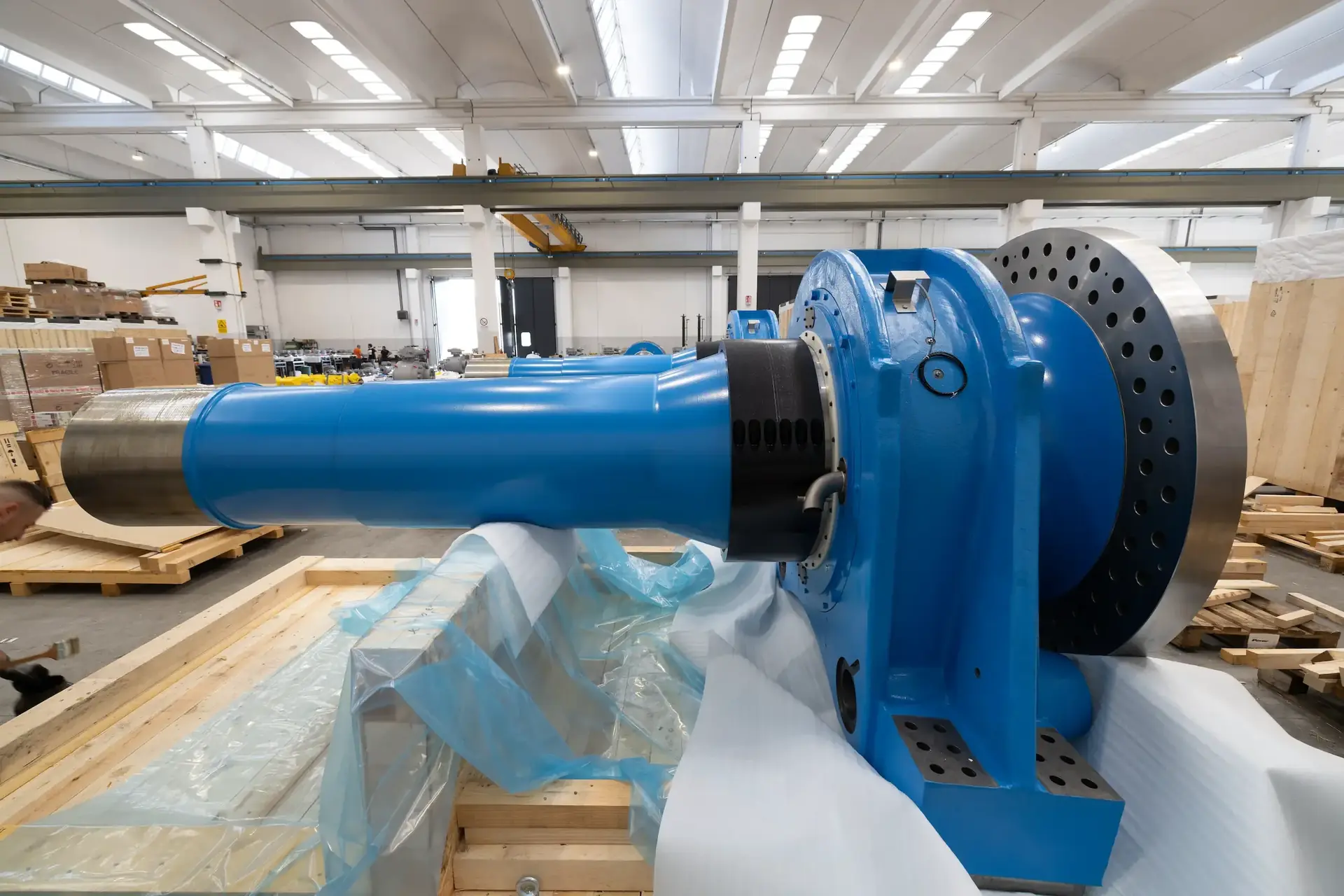
S355 Steel for Wind Power
S355 structural steel supply and processing for wind power applications. We source S355ML, S355NL, and S355J2+N plates from certified European and domestic mills with full EN 10225 compliance for offshore structural use.
S355 structural steel supply and processing for wind power applications. We source S355ML, S355NL, and S355J2+N plates from certified European and domestic mills with full EN 10225 compliance for offshore structural use.
EN 1090-2 EXC3/EXC4
Single Piece up to 80T
NDT 100% Inspection
Offshore Grade
S355 steel for wind power applications, specifically the S355ML and S355NL grades supplied per EN 10225, is engineered to meet the demanding structural requirements of offshore wind turbine support structures. These thermomechanically rolled plates offer a minimum yield strength of 355 MPa in thicknesses up to 63mm, with controlled reductions to 345 MPa in sections up to 100mm and 335 MPa up to 150mm. The guaranteed Charpy V-notch impact energy of 27J at -40°C for S355ML and -20°C for S355NL ensures reliable fracture toughness in North Sea and Baltic Sea environments where operating temperatures can drop below -30°C during winter storm events.
The thickness range of 10mm to 150mm with widths up to 3,500mm allows fabrication of monopile transition pieces, tower sections, and jacket foundation nodes without unnecessary longitudinal welds. Carbon equivalent values (CEV) are strictly controlled to 0.42% maximum for thicknesses under 63mm and 0.45% for thicker plates, enabling preheating temperatures below 100°C during welding per EN 1011-2 recommendations. This low CEV directly reduces fabrication cycle times for monopile manufacturers producing 80 to 120 units annually for 8MW to 15MW turbine installations. Through-thickness reduction of area values for Z35 quality plates consistently exceed 35% in three orthogonal directions, verified by ultrasonic testing per EN 10160 class S2/E2.
Material traceability from mill to final product follows EN 10204 Type 3.1 inspection certificates, with each plate identified by heat number, plate number, and mechanical test results. For projects requiring NORSOK M-630 compliance, additional verification of chemical composition limits for phosphorus (0.020% max) and sulfur (0.010% max) is provided, along with documented weldability testing per NORSOK M-120. The fine-grained ferritic-pearlitic microstructure achieved through controlled rolling and accelerated cooling delivers yield-to-tensile ratios typically between 0.80 and 0.88, providing the ductility margin required for ultimate limit state design in 50-year return period wave conditions with significant wave heights exceeding 14 meters.
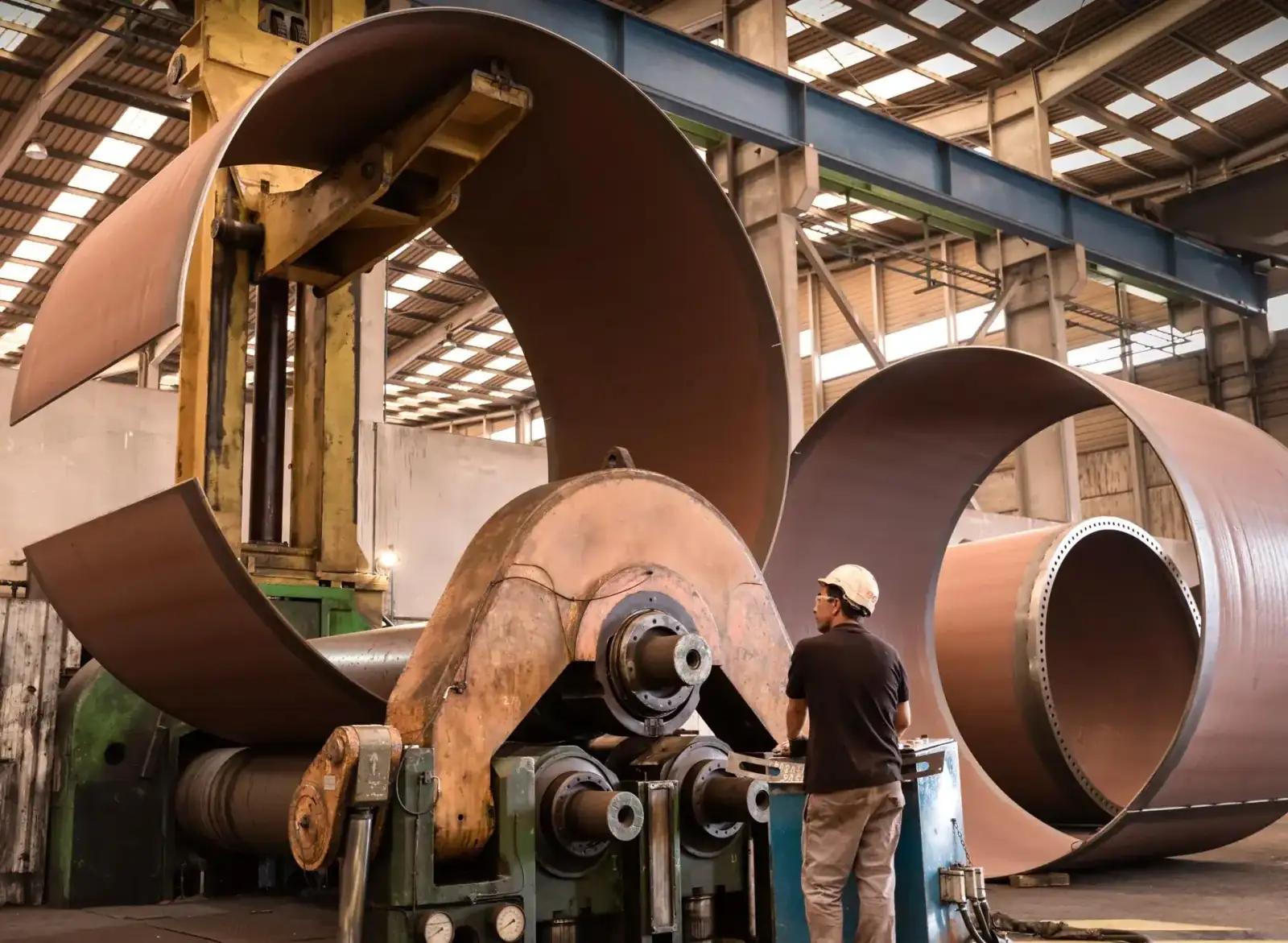
Pre-processing capabilities include CNC plasma cutting with tolerances of ±1mm on straight cuts and ±2mm on contoured profiles, automatic beveling to 30° or 45° angles with ±1° accuracy, and cold forming to radii as tight as 25 times plate thickness for transition piece cones. For jacket structure tubular joints, the material's through-thickness ductility accommodates the triaxial stress states at brace-to-chord intersections where local thicknesses may reach 80mm. All pre-processing is performed under ISO 3834-2 quality control, with documented weld procedure specifications (WPS) qualified per AWS D1.1 and EN ISO 15614-1 for the specific S355ML and S355NL base materials.
Offshore wind farm monopile foundations represent the primary application for S355ML steel plates in thicknesses from 40mm to 150mm. A typical 10MW turbine monopile requires 800 to 1,200 metric tons of steel plate, with the transition piece section fabricated from 60mm to 100mm thick material to withstand bending moments exceeding 200,000 kNm at the mudline. The Z35 through-thickness tested grades are mandatory for flange connections where bolted joints transfer axial loads of 15,000 kN to 25,000 kN per bolt group. Projects in the German Bight, Dogger Bank, and Taiwanese Strait specify S355ML per EN 10225 for its proven fatigue performance in cathodic protection environments with seawater temperatures ranging from -2°C to 25°C.
Jacket foundation structures for water depths exceeding 40 meters utilize S355NL plates in thicknesses from 20mm to 80mm for brace members and chord cans. The four-leg jacket configuration for a 12MW turbine typically contains 60 to 80 tubular joints requiring Z35 quality material at the brace-to-chord intersections. DNV-OS-J101 design standards require fracture mechanics assessment for these joints, where the S355ML's -40°C impact toughness provides safety margins against brittle fracture initiation during installation hammering and 20-year operational life. Grouted connections between jacket piles and sleeves rely on the material's surface finish of Sa 2.5 per ISO 8501-1 to achieve bond strengths of 8 to 12 MPa with high-strength grout formulations.
Tower sections for onshore and offshore wind turbines from 80m to 160m hub height use S355J2+N plates in thicknesses of 10mm to 60mm for the lower sections where flange thicknesses reach 80mm. The conical tower design with diameters tapering from 4.5m at the base to 2.5m at the top requires precise cold forming to maintain ovality tolerances of ±0.5% of diameter per EN 1090-2 EXC3 execution class. For floating offshore wind platforms, S355ML plates in 15mm to 50mm thicknesses form the column and pontoon structures of semi-submersible hulls, where the material must resist hydrostatic pressure at depths of 30m to 50m while supporting turbine dynamic loads. The floating platform steel weight for a 15MW turbine reaches 4,000 to 6,000 metric tons, with S355ML providing the strength-to-weight ratio necessary for cost-effective hull design.
Secondary applications include transition piece boat landing platforms, internal platforms, and cable support brackets fabricated from 10mm to 25mm S355J2+N plates. These components require galvanizing per EN ISO 1461 for corrosion protection, and the material's silicon content (0.15% to 0.55%) is controlled to ensure uniform zinc coating thickness of 85 to 200 microns. For turbine generator housings and nacelle bedplates, S355NL plates up to 40mm thick provide the dimensional stability required for maintaining gearbox and generator alignment within 0.1mm tolerances over 20-year operational life. The material's weldability with solid wire GMAW processes using EN ISO 14341-A G 46 4 M21 filler metals ensures consistent mechanical properties in welded assemblies subjected to high-cycle fatigue loading from wind turbulence.
Leading Top Union delivers S355 steel plates for wind power projects with ISO 3834-2 certification for fusion welding of metallic materials, ensuring that all pre-processing and fabrication activities meet the quality management requirements specified by turbine manufacturers and EPC contractors. The Suzhou facility operates CNC plasma cutting tables with 6m x 20m working areas capable of processing plates up to 150mm thick with nesting efficiency exceeding 85%, reducing material waste by 12% to 18% compared to manual cutting methods. For monopile transition pieces requiring beveled edges, automatic beveling machines achieve consistent angles of 30° ±1° on thicknesses from 20mm to 100mm, eliminating the need for secondary grinding and reducing preparation time by 40% per joint.
A material sourcing network includes direct mill agreements with European and Chinese steel producers certified to EN 10225, providing full traceability from ladle analysis to final plate with EN 10204 Type 3.1 certificates. For NORSOK M-630 compliant projects, documented supply chains with mills holding NORSOK M-650 qualification for S355ML and S355NL grades are maintained. Inventory levels of 2,000 to 3,000 metric tons across thicknesses from 10mm to 150mm enable lead times of 2 to 4 weeks for standard sizes, with expedited processing available for emergency requirements. Each plate is inspected for surface defects per EN 10163-2 class A2 and ultrasonic tested per EN 10160 class S2/E2 before processing, with non-conforming material segregated and documented.
Technical support for material selection, weld procedure qualification, and dimensional verification per project specifications is provided by the engineering team. S355 steel components have been delivered for offshore wind projects in the North Sea, Baltic Sea, and East China Sea, with plate thicknesses up to 120mm for monopile transition pieces and 80mm for jacket chord cans. For projects requiring Z35 through-thickness testing, coordination with accredited laboratories to perform testing per EN 10164 provides documented results within 5 working days of plate delivery. The quality management system includes regular audits of mill production records, third-party inspection by DNV, Lloyd's, or BV upon request, and digital documentation packages compatible with project document control systems.
Value-added services include shot blasting to Sa 2.5 per ISO 8501-1, primer coating with zinc-rich epoxy at 50 to 80 microns dry film thickness, and marking per project-specific requirements with heat numbers, plate numbers, and weld map locations. Logistics coordination includes containerized or break-bulk shipping from Shanghai port to global destinations, with protective edge banding and moisture barrier packaging for corrosion prevention during transit. For serial production of tower sections or monopile cans, batch tracking systems maintain material identity through cutting, beveling, forming, and welding operations, ensuring full traceability to the final assembly. Contact the technical sales team at info@leadingtopunion.com for project-specific pricing and delivery schedules for your next wind power steel requirement.
| Capability | Specification |
|---|---|
| Grade | S355ML / S355NL / S355J2+N |
| Thickness | 10 - 150mm |
| Width | Up to 3,500mm |
| Standard | EN 10225 / EN 10025-4 |
| Impact Test | -40°C (ML) / -20°C (NL) |
| Z-Quality | Z25 / Z35 available |
Send us your requirements and we will respond within 24 hours with pricing and lead time.