Product Overview
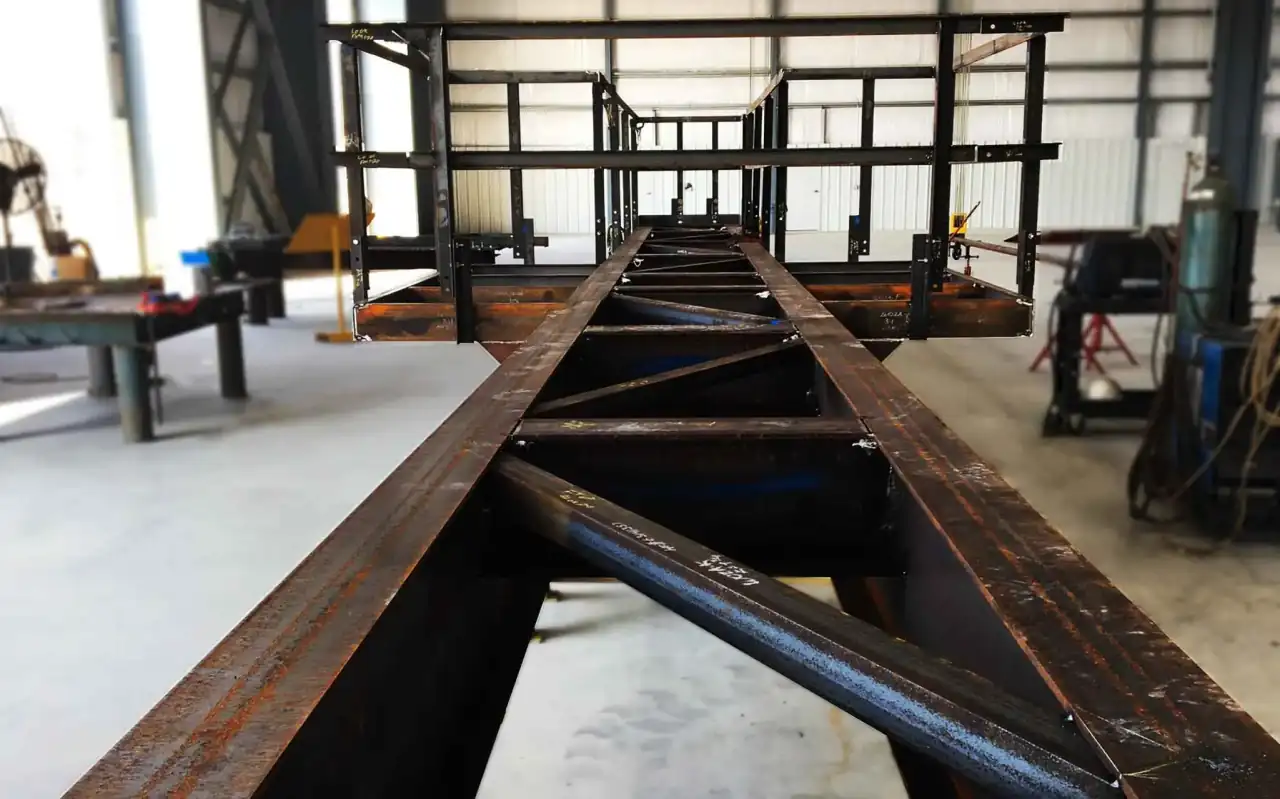
Heavy plate processing for thicknesses up to 200mm demands equipment with sufficient tonnage, thermal control, and dimensional stability to maintain tolerances across large workpieces. At Leading Top Union in Suzhou, the facility is configured specifically for structural and pressure-retaining components in the 50mm to 200mm range, where standard light-plate shops cannot operate. Plate grades from S235JR through S960QL are processed, including Hardox 400/500, AR400/500, and quenched-and-tempered steels per EN 10025-6 and ASTM A514/A517. CNC oxy-fuel cutting tables handle plates over 50mm with kerf compensation and preheat control to minimize HAZ hardness in high-strength low-alloy (HSLA) steels. For plasma cutting up to 80mm, Hypertherm HPR800XD systems with True Bevel capability are used, achieving angular accuracy of ±0.5° on V-groove and K-groove preparations without secondary machining. Waterjet cutting is available for thicknesses up to 150mm where cold-cutting is required to preserve base material properties in heat-sensitive alloys like duplex stainless steels or nickel alloys.
Plate Rolling and Forming Capabilities
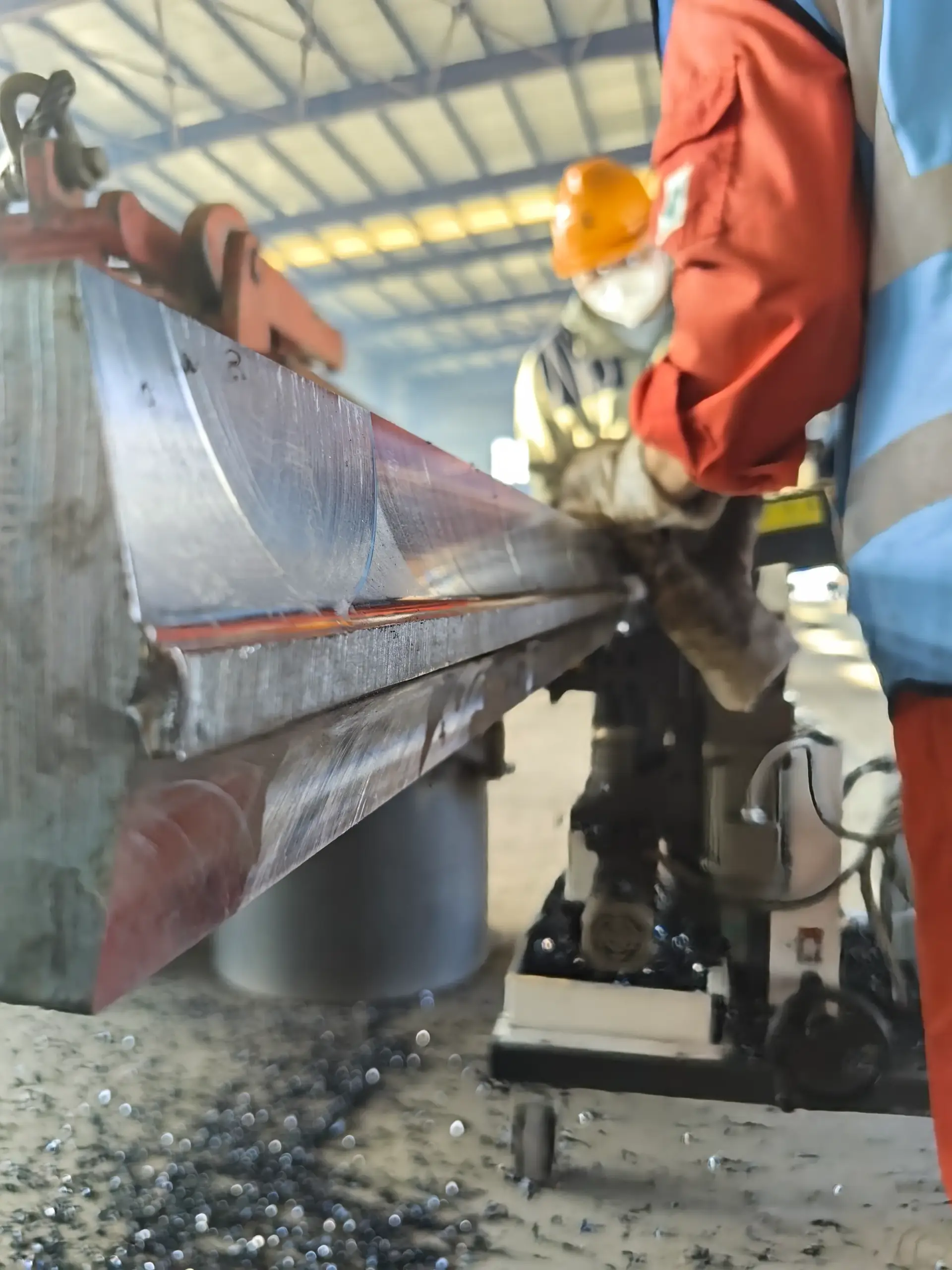
The plate rolling department features a four-roll hydraulic bending machine with 200mm × 3000mm capacity, capable of producing cylinders, cones, and curved sections up to 12 meters in developed length. This machine applies 3,500 tons of bending force with CNC position control to achieve roundness tolerances within 0.5% of nominal diameter per ASME B16.9 and EN 13480 requirements. For thick-wall pressure vessel shells and offshore wind monopile transition pieces, S355NL and S460ML plates are rolled to diameters from 500mm to 6,000mm with consistent ovality below 3mm. Edge preparation is integrated into the workflow using portable beveling machines and CNC milling heads that produce J-groove, V-groove, and K-groove profiles with surface finish Ra 6.3 μm or better. This eliminates the need for subcontracting bevel work, reducing lead time by 3 to 5 days per order. All rolled sections are verified with CMM laser trackers and ultrasonic thickness gauging to confirm wall thickness uniformity after forming.
Precision Drilling and Quality Assurance
CNC drilling through 200mm plate is performed on a 5-axis gantry drill with automatic tool changers, capable of hole diameters from 12mm to 100mm in a single pass. Positional accuracy is maintained at ±0.1mm over 6-meter lengths, with hole-to-hole tolerances of ±0.05mm for bolt patterns on flanges and baseplates. Drilling through hardened AR500 plate up to 150mm thick is achieved using carbide-tipped drills with through-spindle coolant, achieving feed rates of 50-80 mm/min without work hardening. For subsea manifold components and mining chute liners, drilling is combined with countersinking and tapping in one setup, reducing handling errors. The quality system under ISO 3834-2 and EN 1090-2 EXC3 requires that all heavy plate processing steps—cutting, rolling, drilling, and beveling—are documented with material traceability per EN 10204 3.1 certificates. This ensures that every plate can be traced back to its mill test report, with weld mapping and NDE records linked to the production batch.
Applications & Industries
Heavy plate processing up to 200mm is essential in oil and gas upstream and midstream infrastructure, where pressure vessels, separators, and pipeline launchers/receivers require wall thicknesses exceeding 100mm for high-pressure service. For example, a 48-inch diameter pig launcher fabricated from SA516 Gr.70N plate at 120mm thickness operates at 150 bar design pressure per ASME Section VIII Div. 1. Oxy-fuel cutting produces clean edges with minimal taper, and rolling capability forms the shell courses to within 1.5mm of true radius. Clad plates—carbon steel base with stainless steel or Inconel overlay—are also processed for corrosive service in sour gas environments, cutting through the full 200mm thickness without delamination. The ±0.5° bevel accuracy ensures consistent weld joint geometry for automated submerged arc welding (SAW) on longitudinal and circumferential seams, reducing weld defect rates by up to 30% compared to manual bevel preparation.
Offshore Wind Energy Components
In offshore wind energy, transition pieces and monopile foundations for 15MW+ turbines use S420ML and S460ML plates from 80mm to 150mm thick, rolled into diameters of 6 to 10 meters with lengths exceeding 30 meters. The 200mm × 3000mm rolling capacity allows forming the thickest sections of these structures, which must withstand cyclic loading from wave action and turbine operation over 25-year design lives per DNV-OS-J101. J-groove bevels are cut on the longitudinal seams of rolled cans to ensure full penetration welds without backing strips, and bolt holes for the transition piece flange are drilled using the 5-axis CNC drill with ±0.1mm positional accuracy. For internal ring stiffeners, S355NL plate up to 200mm thick is cut and drilled, maintaining flatness within 2mm over 3-meter lengths. Each component is marked with heat numbers and weld map references per EN 1090-2 EXC3 traceability requirements, enabling full lifecycle documentation for certification bodies like DNV-GL and Lloyds.
Mining and Mineral Processing Equipment
Mining and mineral processing equipment relies on heavy AR plate for wear-resistant liners, chutes, hoppers, and crusher components. Hardox 500 and AR500 plates from 80mm to 200mm thickness are cut and drilled for dump truck bodies, shovel buckets, and grinding mill shell liners. Plasma cutting with bevel capability produces chamfered edges on AR500 liners for weld-on installation, reducing stress risers at joints. Countersunk holes for bolted liner systems are drilled using carbide tooling that maintains hole diameter tolerance of ±0.2mm through hardened plate. For primary gyratory crusher concaves and mantles, manganese steel (ASTM A128) plates up to 150mm thick are processed with waterjet cutting to avoid heat-affected zone embrittlement. The cold-cutting process preserves the work-hardening characteristics of the manganese steel, extending service life by 15-20% in high-impact applications. All wear parts are dimensionally verified with 3D scanning to ensure fit within OEM tolerances of ±1mm on critical mating surfaces.
Power Generation Applications
Power generation, including thermal, nuclear, and hydroelectric plants, requires heavy plate components for steam drums, feedwater heaters, penstocks, and turbine casings. For a 660MW supercritical boiler, steam drum sections are rolled from SA-299 Grade A plate at 130mm thickness, with longitudinal weld bevels cut to ASME Section IX qualified geometries. CNC drilling produces tube holes in the drum wall for downcomers and risers, maintaining hole-to-hole spacing within ±0.5mm over 8-meter lengths to match tube bundle layouts. In hydroelectric penstocks, S355J2+N plates up to 80mm thick are rolled into 4-meter diameter sections and beveled for field welding with V-groove profiles. Quenched-and-tempered plates like ASTM A517 Grade F are also processed for high-pressure feedwater heaters operating at 350°C and 200 bar. Each plate is certified with Charpy V-notch impact testing at -20°C per EN 10025-6, ensuring fracture toughness in cold-weather installations. Integrated processing reduces the number of suppliers for these critical components, cutting procurement lead time by 25%.
Why Choose Leading Top Union for Heavy Plate Processing (up to 200mm)
Leading Top Union’s heavy plate processing capability is built around equipment specifically rated for 200mm thickness, not adapted from light-plate machinery. The four-roll hydraulic plate roll with 3,500-ton capacity and CNC back-up roll positioning achieves consistent roundness across the full 3-meter width, even in S960QL high-strength steel. ISO 3834-2 certification is maintained for fusion welding of heavy sections, which requires documented weld procedures, qualified welders, and NDE personnel for ultrasonic testing (UT) and magnetic particle inspection (MPI) on plates up to 200mm thick. CNC oxy-fuel tables use automatic height control and multi-torch setups to cut multiple identical parts simultaneously, reducing cycle time by 40% for large production runs. For prototype or low-volume orders, single-piece flow with full dimensional inspection reports is offered, including CMM data and UT thickness mapping, at no additional cost for first articles.
Material Grades and Quality Control
A wide range of plate grades is processed including carbon steels (S235, S355, S460, S690, S960), abrasion-resistant steels (Hardox 400/450/500, AR400/500), pressure vessel steels (SA516, SA537, SA299, P355GH), and quenched-and-tempered steels (A514, A517, Weldox 700/900). Material sourcing from certified mills ensures EN 10204 3.1 or 3.2 certificates with full chemical analysis and mechanical properties. For each order, a detailed processing plan is provided that includes cutting path optimization to minimize waste, bevel angle verification reports, and rolling sequence documentation. The quality control team performs 100% dimensional inspection on critical features using laser trackers and coordinate measuring machines, with tolerances traceable to ISO 2768-m or tighter customer specifications. In-house shot blasting to SA 2.5 and primer coating per ISO 12944 is also available, protecting heavy plates during transit and storage before final fabrication.
Logistics and Engineering Support
The location in Suzhou, within 80 km of Shanghai ports, enables efficient logistics for heavy plate shipments to global EPC projects. Coordination with freight forwarders specializing in oversized cargo ensures plates up to 12 meters long and 200mm thick are loaded, secured, and documented for sea freight. For urgent orders, a 24/7 production schedule with shift handovers keeps CNC machines running continuously, reducing typical lead times from 4 weeks to 10 working days for standard heavy plate processing. Design-for-manufacturing (DFM) reviews are also offered where engineers analyze 3D models to optimize bevel angles, hole patterns, and rolling sequences for cost reduction without compromising structural integrity. This collaborative approach has helped clients reduce material waste by 12% and machining time by 18% on complex heavy plate assemblies. Contact the technical sales team at info@leadingtopunion.com with plate specifications, grade, thickness, and required tolerances for a quotation within 24 hours.