Product Overview
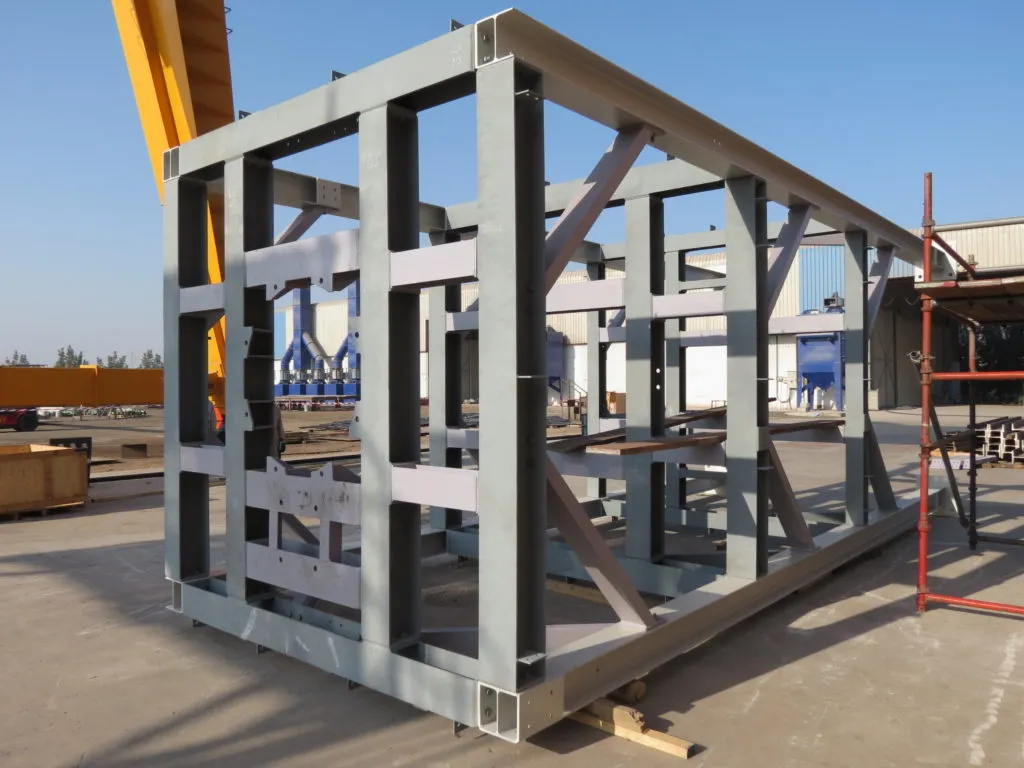
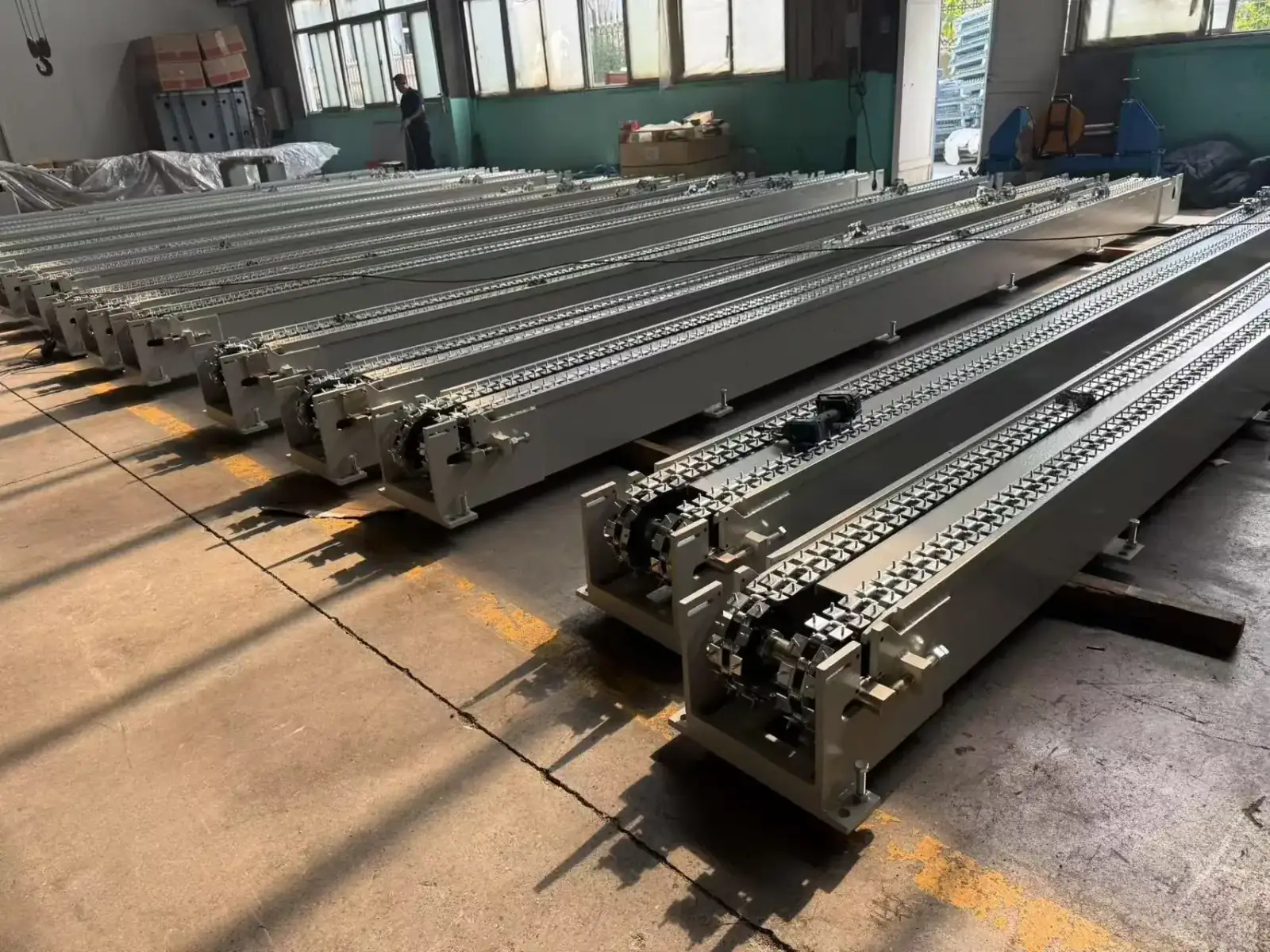
Conveyor system frames from Leading Top Union are engineered for bulk material handling operations where structural integrity under dynamic loading is non-negotiable. Fabricated from S235, S275, or S355 steel grades per EN 10025, these frames support belt widths from 400 mm to 2400 mm and accommodate gallery spans up to 100 meters using truss-type designs. Each frame is calculated for fatigue resistance per EN 1993-1-9 and designed to withstand start-up torque, belt sag, and material impact forces. Fabrication tolerances follow ISO 2768-m for general dimensions and EN 1090-2 EXC3 for execution class, ensuring weld quality and fit-up suitable for high-capacity overland and in-plant conveyor systems.
Thermal expansion management is integrated into every stringer section and drive frame. For systems operating in environments from -30°C to +60°C, sliding supports and expansion joints are calculated per EN 1991-1-5. Idler frames are precision-bent and welded with jig-controlled alignment to maintain belt tracking within ±3 mm across 12-meter sections. Stringer sections are manufactured in modular lengths up to 12 meters for standard applications, with custom lengths available for specialized layouts. All bolted connections use grade 8.8 or 10.9 fasteners with preload specifications per EN 1993-1-8, and gusset plates are designed for load transfer without stress concentrations exceeding 150 MPa under service conditions. For high-tension applications such as long overland conveyors exceeding 5 km in length, take-up frames are reinforced with double-gusset configurations and utilize high-strength bolts in grade 10.9 to accommodate belt tensions up to 300 kN. These frames also incorporate adjustable slider beds with UHMW polyethylene liners to minimize friction and wear at loading zones, reducing maintenance intervals by an estimated 20% compared to standard steel beds.
Corrosion protection is specified based on environmental exposure. For outdoor installations in coastal or tropical climates, hot-dip galvanizing per ISO 1461 provides a minimum coating thickness of 85 µm for sections up to 6 mm thick and 100 µm for thicker steel. For underground or high-humidity applications, three-coat paint systems are applied with zinc-rich primer, epoxy intermediate, and polyurethane topcoat achieving 240 µm DFT minimum per ISO 12944 C4 or C5 environments. All surface preparation is blast-cleaned to Sa 2.5 per ISO 8501-1. Modular construction allows containerized delivery with pre-assembled sections up to 12 meters long, reducing field welding by up to 40% compared to site-built structures. For additional durability in abrasive environments, wear plates at transfer points are fabricated from AR500 steel with a minimum hardness of 470 HB, and skirtboard liners are available in ceramic tile composites rated for 5,000+ hours of service life under continuous material flow.
Applications & Industries
In the oil and gas sector, conveyor system frames must handle explosive atmospheres and heavy loads. Leading Top Union fabricates drive frames and transfer towers for petrochemical plants where belt speeds reach 4.5 m/s and material densities exceed 2.0 t/m³. For a recent project in the Middle East, 48-meter truss galleries were supplied for a phosphate handling system, designed to CEMA standards with a safety factor of 5:1 on all structural members. These frames incorporate fire-resistant coatings per NORSOK M-501 and are engineered for seismic Zone 2 loads per ASCE 7. All welds on load-bearing members undergo 100% visual inspection plus ultrasonic testing per ISO 17640 for thicknesses above 12 mm. For high-temperature applications such as clinker or sinter handling, frames are fabricated with thermal barrier coatings and expansion gaps calculated for material temperatures up to 200°C, ensuring structural stability without deformation over a 20-year design life.
Offshore wind and shipbuilding applications demand frames resistant to salt spray and dynamic fatigue. Conveyor frames for offshore wind tower manufacturing facilities support belt widths up to 2000 mm moving steel plate sections weighing up to 15 tons each. These structures are designed to DNV-GL standards for marine environments, with hot-dip galvanized surfaces and stainless steel fasteners (A4-80 grade). For shipyard plate handling, idler frames are fabricated with sealed-for-life bearings rated for 50,000 hours L10 life per ISO 281. Modular stringer sections allow rapid reconfiguration as production lines evolve, with bolted connections that maintain alignment within ±1 mm across 6-meter spans. In floating production storage and offloading (FPSO) vessels, frames are designed for dynamic loading from wave-induced motions, with base plates welded to DNV-certified deck stiffeners and all structural members analyzed for fatigue per DNV-RP-C203 using a stress range below 40 MPa for infinite life.
Mining and power generation applications require frames that survive continuous operation under abrasive conditions. Conveyor galleries for coal-fired power plants are designed for 24/7 operation with belt capacities up to 5,000 t/h. Truss structures are analyzed for wind loads up to 180 km/h and snow loads per EN 1991-1-3. For underground mining, conveyor frames are supplied with reduced height profiles (as low as 600 mm) for low-seam applications, fabricated from S355 steel with reinforced gussets at all joints. These frames include integrated walkways and handrails per EN ISO 14122, with non-slip grating meeting slip resistance Class R12 per DIN 51130. For longwall mining systems, frames are engineered to withstand dynamic impact loads from material surges of up to 3,000 t/h, with impact beds incorporating rubber-cushioned idler rolls spaced at 300 mm centers to absorb energy and reduce belt damage. All components are designed for easy replacement without structural disassembly, and critical wear parts are supplied with spare kits per project specifications.
Why Choose Leading Top Union for Conveyor System Frames
Certifications provide direct assurance for global EPC projects. Leading Top Union holds ISO 3834-2 for full quality control in welding, EN 1090-2 EXC3 for execution of steel structures, and AWS D1.1 for structural welding. These certifications are verified through annual audits and cover all fabrication processes from material receipt to final inspection. For conveyor frames, this means documented weld procedures (WPS) per ISO 15609-1, welder qualifications per ISO 9606-1, and traceability for all load-bearing components. A quality manual aligns with ISO 9001:2015, and inspection reports include dimensional checks, NDT results, and coating thickness measurements for every project shipment. For nuclear power plant applications, additional certification per ASME NQA-1 is available, with material traceability extending to heat numbers and mill test reports for all structural steel used in safety-related frames.
Engineering support is integrated from concept through commissioning. An in-house team uses STAAD.Pro and Tekla Structures for 3D modeling and finite element analysis of conveyor frames under static and dynamic loads. Deflection analysis ensures gallery sag does not exceed L/360 under full load per EN 1993-1-1. For long-span structures over 60 meters, natural frequency analysis is performed to avoid resonance with belt idler rotation speeds (typically 50-200 rpm). Detailed erection manuals are supplied with lift point calculations and bolt torque specifications. This engineering rigor reduces field fit-up issues and accelerates project schedules by an average of 15% based on feedback from EPC partners in Southeast Asia and Australia. For complex projects with multiple belt drives, dynamic simulation using discrete element modeling (DEM) predicts material flow patterns and impact forces at transfer points, allowing frame reinforcement exactly where needed and reducing material spillage by up to 90% compared to standard designs.
Logistics and delivery are optimized for remote and congested sites. The Suzhou facility ships conveyor frames in containerized modules up to 12 meters long, with all hardware, shims, and touch-up paint included per project bill of materials. For a recent mining project in Papua New Guinea, 32 container loads of truss sections, idler frames, and drive bases were delivered with zero customs delays due to complete documentation including material certificates per EN 10204 3.1 and packing lists in metric and imperial units. CIF delivery is offered to major ports worldwide, and project-site storage with weatherproof packaging can be arranged. Lead times for standard conveyor frames range from 8 to 14 weeks depending on complexity, with expedited options for maintenance replacements. For emergency shutdowns, a rapid-response service can deliver critical frame components within 4 weeks, using pre-stocked raw materials and dedicated fabrication slots to minimize downtime for high-value production lines.