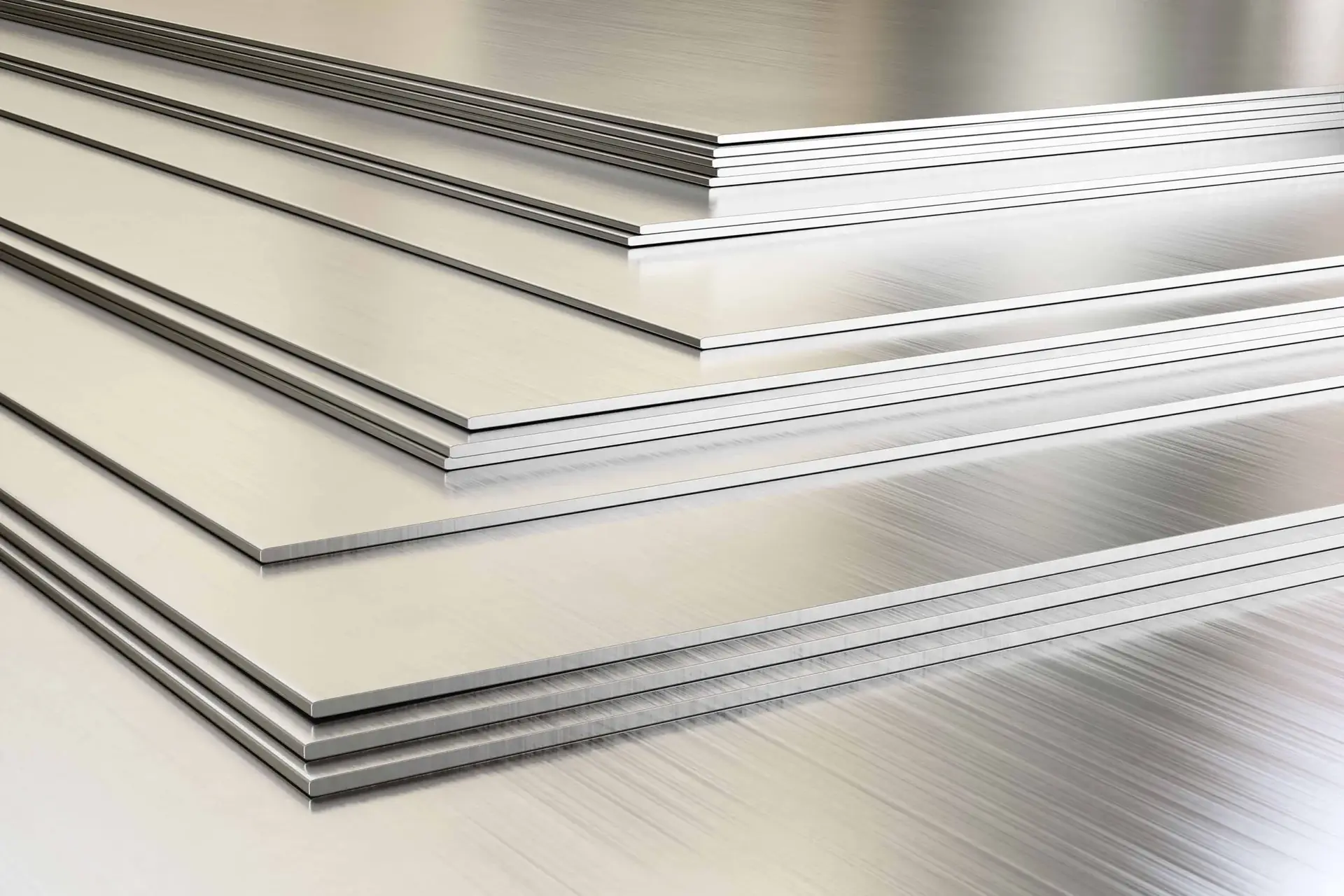
Stainless Steel Plate Supply
Comprehensive stainless steel plate supply covering austenitic, ferritic, duplex, and super duplex grades. Mill-direct sourcing from TISCO, Baosteel, Outokumpu, and Posco with competitive pricing and full certification.
Comprehensive stainless steel plate supply covering austenitic, ferritic, duplex, and super duplex grades. Mill-direct sourcing from TISCO, Baosteel, Outokumpu, and Posco with competitive pricing and full certification.
Mill Direct Supply
MTC Verified
Global Sourcing
Cut-to-Size Service
Leading Top Union supplies stainless steel plates in austenitic and duplex grades, sourced from certified mills and processed in our Suzhou facility. Our inventory covers 304/304L, 316/316L, 316Ti, 321, 347, 310S, and 904L austenitic grades, plus duplex 2205 (S31803/S32205) and super duplex 2507 (S32750). Thickness ranges from 3 mm to 80 mm, with widths from 1,000 mm to 2,500 mm. All plates conform to ASTM A240, EN 10088-2, and GB/T 24511 standards. We provide material certificates per EN 10204 Type 3.1 and PED 2014/68/EU for pressure equipment applications. Each plate undergoes positive material identification (PMI) and intergranular corrosion testing per ASTM A262 Practice E to verify composition and corrosion resistance before dispatch.
Surface finish options include No.1 (hot-rolled, annealed, and pickled), 2B (cold-rolled, bright annealed), BA (bright annealed with mirror-like reflectivity), and mirror polish up to 400 grit. For duplex grades, No.1 or 2B finishes are recommended to maintain optimal pitting resistance equivalent number (PREN) values above 35 for 2205 and above 40 for 2507. Plate flatness tolerances meet ASTM A480 requirements, with camber limited to 3 mm per 3,000 mm length. Standard stock sizes include 2,000 mm x 6,000 mm and 1,500 mm x 6,000 mm, with custom dimensions available through plasma or waterjet cutting services. Dimensional accuracy is verified using calibrated micrometers and ultrasonic thickness gauges traceable to national standards.
For high-temperature service, 310S plates maintain oxidation resistance up to 1,100°C in continuous service, making them suitable for furnace components and heat exchangers in petrochemical plants. The 904L grade offers enhanced resistance to sulfuric acid environments, with corrosion rates below 0.1 mm/year in 50% sulfuric acid at 60°C. Duplex 2205 provides yield strength approximately twice that of 316L, at 450 MPa minimum, while maintaining excellent stress corrosion cracking resistance in chloride-containing environments up to 150°C. Super duplex 2507 extends this performance to 250°C with PREN values exceeding 40, critical for offshore oil and gas equipment exposed to seawater and sour service conditions per NACE MR0175/ISO 15156. Additional technical data includes elongation requirements: 316L plates typically achieve 40% minimum elongation in 50 mm gauge length, while duplex 2205 achieves 25% minimum, ensuring ductility for forming operations such as bending and rolling. Hardness values for 304L plates are maintained below 200 HB to facilitate machining, with controlled ferrite content in duplex grades between 35% and 55% to optimize toughness at cryogenic temperatures down to -46°C per ASTM A923. For critical applications, plates can be supplied with ultrasonic testing per ASTM A578 Level B, guaranteeing freedom from laminations and inclusions exceeding 1.6 mm equivalent flaw size.
In the oil and gas sector, stainless steel plates are used for pressure vessels, storage tanks, and piping components in upstream, midstream, and downstream operations. For offshore platforms, super duplex 2507 plates with thicknesses from 10 mm to 50 mm are specified for seawater cooling systems, firewater deluge piping, and subsea manifolds operating at depths exceeding 3,000 meters. These plates meet DNV-GL and API specifications for sour service, with controlled ferrite content between 35% and 55% to ensure toughness at temperatures down to -46°C. Plates for topside modules and FPSO vessels benefit from weight reduction and corrosion resistance, with duplex 2205 offering a 15-20% weight saving compared to 316L for equivalent structural strength.
The petrochemical and chemical processing industry relies on 316/316L and 904L plates for reactors, columns, and heat exchangers handling aggressive media. For urea plants, 316L urea-grade plates with controlled carbon content below 0.030% and molybdenum content above 2.50% resist corrosion in ammonium carbamate environments at temperatures up to 200°C. In sulfuric acid production, 904L plates with thicknesses of 6 mm to 20 mm are used for absorption towers and piping, demonstrating corrosion rates under 0.05 mm/year in 98% acid at 80°C. Plates are supplied with full traceability to EN 10204 Type 3.1 certificates, including chemical analysis and mechanical test results, meeting the requirements of ASME Section VIII Division 1 for pressure vessel fabrication. For pharmaceutical applications, 316L plates with electropolished surface finishes achieving Ra < 0.5 µm are available to meet cGMP cleanliness standards, with passivation per ASTM A967 to remove free iron and enhance corrosion resistance in clean-in-place systems operating at 80°C with 1% sodium hydroxide solutions.
Power generation applications include flue gas desulfurization (FGD) systems in coal-fired plants, where 316L and 2205 plates resist sulfuric acid condensate at pH levels as low as 1.5 and temperatures up to 120°C. For nuclear power plants, 304L and 316L plates with controlled cobalt content below 0.05% minimize activation under neutron flux, meeting RCC-M and ASME Section III requirements. In offshore wind energy, duplex 2205 plates are used for transition pieces and tower sections exposed to marine atmospheres, with a design life exceeding 25 years in C5-M corrosion environments per ISO 12944. Plates for wind turbine foundations are cut to precise dimensions using waterjet technology, achieving tolerances of ±0.5 mm for bolt hole patterns and edge preparation for welding per AWS D1.1. For geothermal power plants, 316Ti plates with titanium stabilization resist chloride stress corrosion cracking in brine environments at temperatures up to 300°C, with controlled sulfur content below 0.005% to prevent hot cracking during welding. These plates are tested per ASTM G48 Method C for critical pitting temperature, typically exceeding 25°C for 316Ti in ferric chloride solution.
Mining and mineral processing operations use 304L and 316L plates for slurry pipelines, thickener tanks, and leaching vessels handling abrasive and corrosive slurries. In copper solvent extraction-electrowinning plants, 316L plates with thicknesses of 8 mm to 25 mm resist acidic copper sulfate solutions at temperatures up to 60°C, with corrosion rates below 0.1 mm/year. For gold cyanidation circuits, 304L plates are specified for carbon-in-pulp tanks and electrowinning cells, where resistance to cyanide solutions at pH 10-11 is essential. Plates are supplied with certified mechanical properties including yield strength, tensile strength, and elongation, enabling engineers to perform finite element analysis for structural integrity under cyclic loading conditions typical of grinding and conveying systems. For alumina refining in Bayer process plants, 316L plates with controlled molybdenum content of 2.50-3.00% resist caustic solutions at temperatures up to 250°C and pressures up to 3.5 MPa, with intergranular corrosion testing per ASTM A262 Practice C to ensure resistance to sensitization during welding.
The Suzhou facility operates with ISO 3834-2 certification for welding quality, ensuring that cut-to-size plates and fabricated components meet international standards for fusion welding of metallic materials. A quality management system integrates incoming material inspection, in-process dimensional checks, and final testing per EN 1090-2 EXC3 execution class for structural steelwork. Each plate is inspected for surface defects using visual examination and dye penetrant testing per ASTM E165, with acceptance criteria based on ASME Section V. PMI verification using handheld XRF analyzers confirms grade composition within 0.5% of specified ranges, providing traceability from mill to final delivery. Intergranular corrosion testing per ASTM A262 Practice E is performed on all 304L and 316L plates intended for welded fabrication in corrosive environments.
Flexible processing capabilities include plasma cutting with tolerances of ±1.0 mm for thicknesses up to 40 mm and waterjet cutting with ±0.3 mm accuracy for complex geometries. CNC plasma machines handle plates up to 80 mm thick with bevel angles up to 45 degrees, reducing weld preparation time for fabricators. For duplex and super duplex grades, specialized cutting parameters maintain heat-affected zone integrity and prevent sigma phase formation. Plates can be supplied with certified mechanical properties at elevated temperatures, including yield strength at 300°C for 316L and 2205, critical for pressure vessel design per ASME Section II Part D. The inventory management system ensures lead times of 2-4 weeks for standard grades and sizes, with expedited processing available for urgent projects requiring material within 7 working days. For high-volume orders exceeding 100 metric tons, production scheduling allows for mill-direct shipments with reduced lead times, and plates can be supplied with custom packaging including wooden crates with desiccant for export to high-humidity regions.
Global EPC firms and fabricators choose this supplier for technical accuracy and compliance with international codes. Documentation packages include EN 10204 Type 3.1 certificates, PMI reports, dimensional inspection reports, and NDT results upon request. Plates are marked with heat numbers, grade, and dimensions for full traceability throughout the supply chain. For projects requiring third-party inspection, coordination with classification societies such as DNV, Lloyd's Register, and Bureau Veritas is provided for witness testing and certification. Technical support is available for material selection, welding procedure specification (WPS) development, and corrosion testing per ASTM G48 for pitting resistance. Contact the engineering team at sales@leadingtopunion.com for a quotation or to discuss specific stainless steel plate requirements for your next project.
| Parameter | Specification |
|---|---|
| Austenitic | 304/304L, 316/316L, 316Ti, 321, 347, 310S, 904L |
| Duplex | 2205 (S31803/S32205), 2507 (S32750) |
| Thickness | 3 - 80mm |
| Width | 1,000 - 2,500mm |
| Standards | ASTM A240, EN 10088-2, GB/T 24511 |
| Testing | MTC 3.1, intergranular corrosion test, PMI |
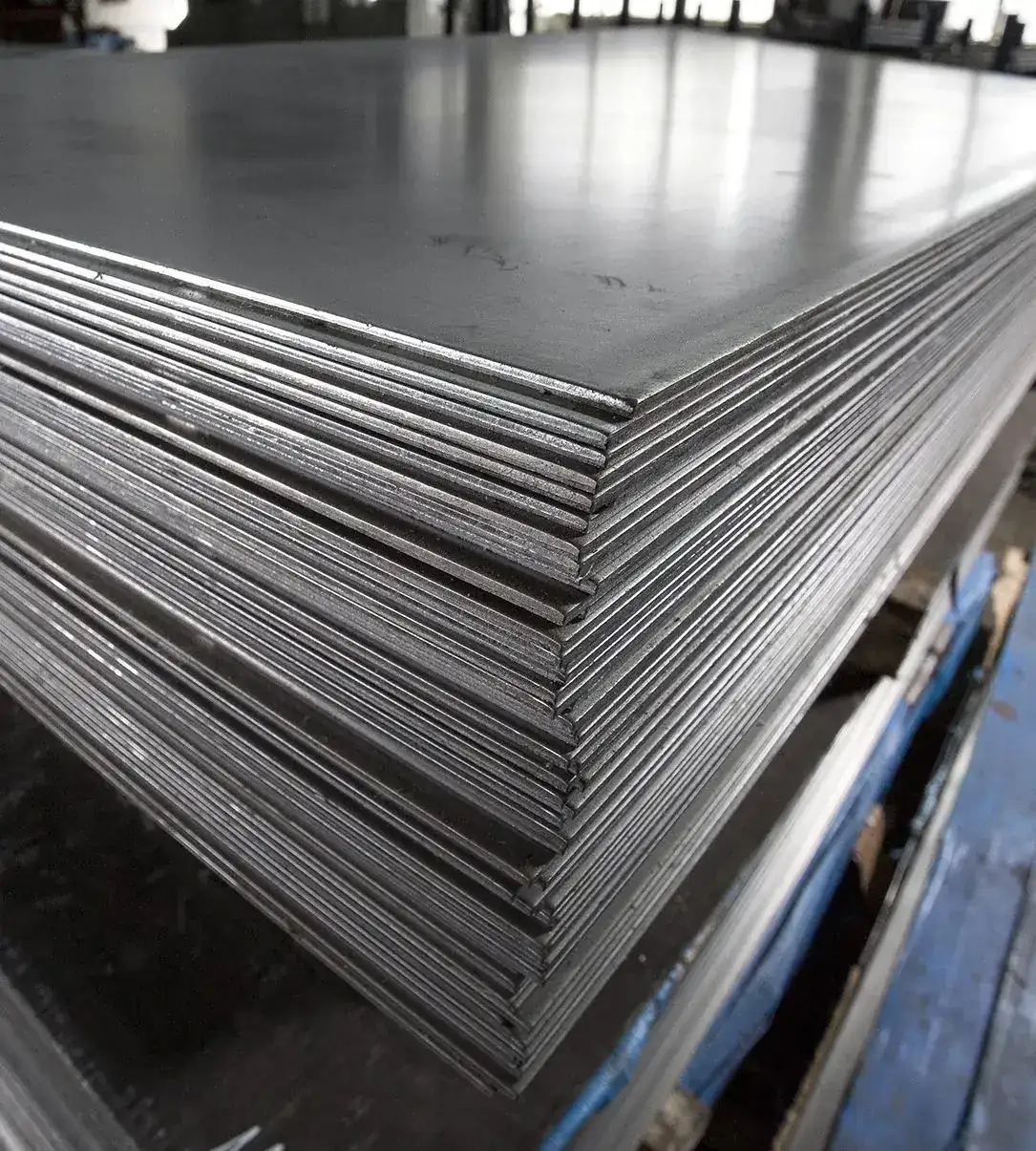
Send us your requirements and we will respond within 24 hours with pricing and lead time.